Showing posts with label Sino-Tibetan. Show all posts

07 October 2016

Celtic *marko- 'horse' (updated)

According to Gamkrelidze-Ivanov1, Celtic *marko- 'horse' (Old Irish marc, Middle Welsh march, Gaulish márkan [acc.])2 and Germanic *márxa-/*margá- 'horse, mare' (Old Icelandic marr 'horse', merr 'mare', Old High German marah- 'horse', meriha 'mare') is an Asian Wanderwort related to horseback riding in the Eurasian steppes before the first millenium BC.

The closest forms would be North Caucasian *far-nē 'horse, mare', Sinitic *mrāʔ , Tibeto-Burman *mrāŋ 'horse', with Schwebeablaut. These words3 look as different formations from a lexeme found in Altaic *mórV 'horse' (Mongolian *mori, Tungusic *murin, Korean *màr). One of these derivations, with a nasal suffix (*mori-n), found in Mongol and Tungusic, would be the origin of the Tibeto-Burman and North Caucasian word. The other would be a diminutive *mor-qa reflected in the Sinitic and Celto-Germanic words.
 
However, Sanskrit mṛga 'deer, antelope' would point to a possible origin of this Wanderwort in the domestication of wild horses by the Botai culture of northern Kazakhstan (3,500-3,000 BCE). 
________________________________________________________________________
1 T. Gamkrelidze & V. Ivanov (1995): Indo-European and the Indo-Europeans, p. 472-473.
2 R. Matasović (2009): Etymological Dictionary of Proto-Celtic, p. 257.
3 For which Sergei Starostin reconstructs a Sino-Tibetan protoform *mrāH / *mrāŋ.

13 November 2013

Man and dog (updated)

Uralic *koje 'man, person' is a remnant of a Borean word which spread as a Wanderwort into East Caucasian *χχHweje (NCED 26) and Tibeto-Burman *qhʷi:j 'dog'1. The suffixed variant  *koj(e)-ra  > Uralic *kojra 'male (dog, man)' would correspond to East Caucasian *χχHwej-rV 'dog' (oblique stem) and Kartvelian (Svan) xwir- 'male (dog)'. 

On the other hand, Sinitic *khʷi:-n 'dog' borrowed into I*k´(u)wo:n (a cultural loanword whose direction has been often reversed by Indo-Europeanists2) would be derived from the same lexem with a different suffix. 

Unfortunately, most macro-comparativists are unable to differentiate between borrowed and inherited lexicon3, as they blindly apply the comparative method coined in the 19th by Neogrammarians, which assumes common inheritance from a single source, represented by the genealogical tree model. By applying it to some hundreds of words, this process ultimately leads to the reconstruction of non-existent macro-families whose chronology is shallower (typically 2-3 times) than the actual ones. 
______________________ 
1 For which Starostin reconstructed a Sino-Caucasian etymology.
2 T.V. Gamkrelidze & V.V. Ivanov (1995): Indo-European and the Indo-Europeans, p. 507. 
3 Generally, the lesser the semantic latitude, the likelier we're dealing with a Wanderwort, as it's often the case with names of domesticated animals.

04 April 2013

Basque begi 'eye' (updated)


Basque begi 'eye' is cognate to Sino-Tibetan *mjVk 'eye' and Burushaski *-moq- 'face, cheek', with regular denasalization of initial *m-. This lexeme also appears as the second member of Nakh-Daghestanian *wimq’V 'witness; true' (NCED 2134), presumably a fossilized compound

By contrast, the Caucasian word for 'eye', *ʡwĭlʡi (NCED 34)1 reflected in IE *wel- 'to see' > Latin vultus 'face'.
__________________________
1 Despite this, Starostin constructs from it a "Sino-Caucasian" etymology to which Bengtson links the Basque word.

13 March 2013

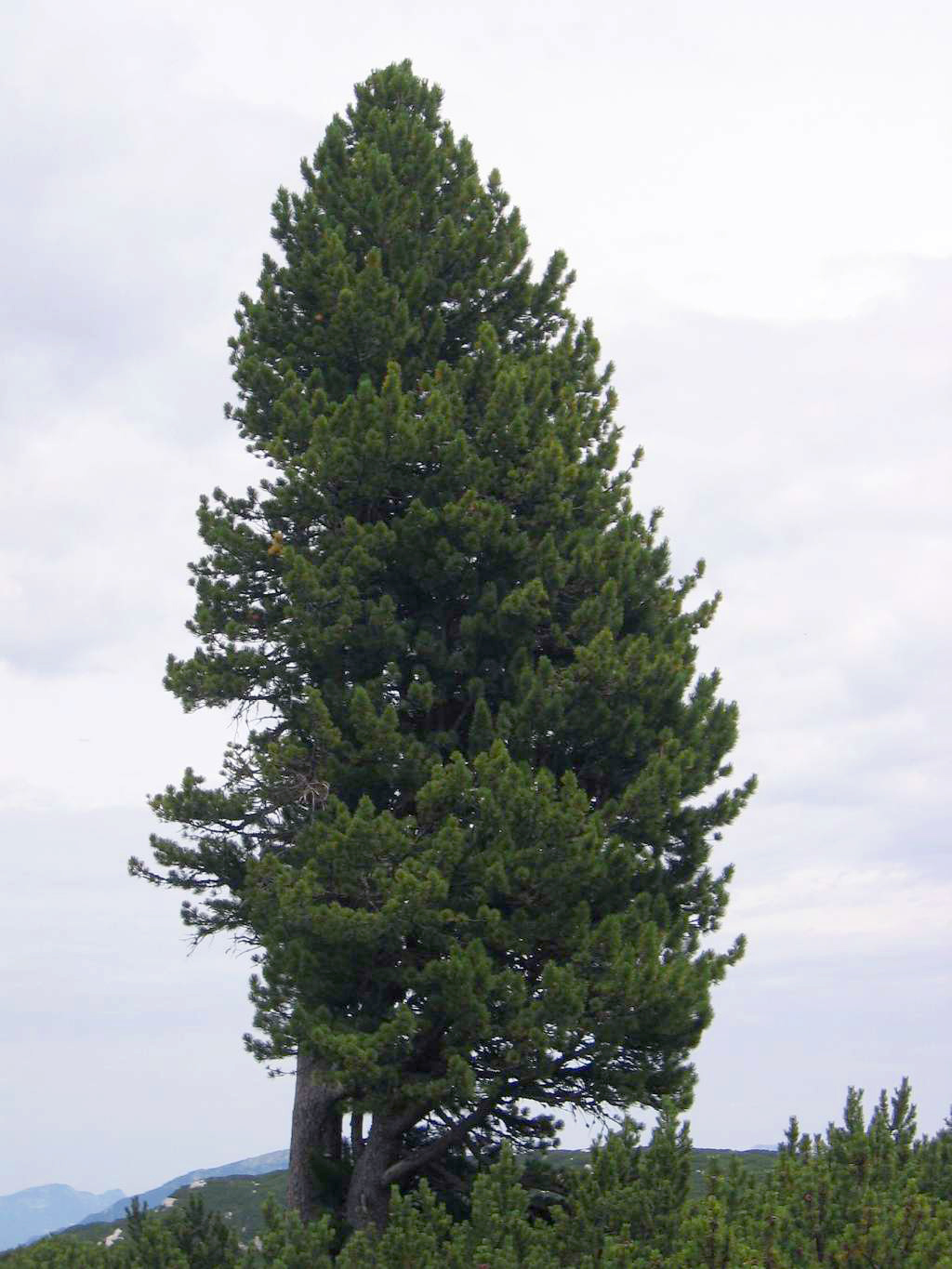
Italian cembro, cembra 'Swiss pine' (updated)

Swiss pine

Italian cembro, cembra, cirmolo 'Swiss pine (Pinus cembra)' is cognate to Friulan cirmul, Ladin cirum, zirm, Raetho-Romance ğèmber (Engadin), žember (Bergün/Bravuogn), Romanian zâmbru, and High German Zirbe, Zirbel, Zirbelkiefer. This would point to a substrate loanword *kemro- ~ *kirmo- which my colleague Marco Moretti considers to be of Tyrrhenian (Rhaetic) origin. 

Another name for the Swiss pine used in Switzerland is Arbe, Arve < *arbo-, with loss of the initial postvelar and denasalization.

For these words I'd propose a Vasco-Caucasian etymology from Caucasian *qq’wǝmV 'grain, fruit stone', Sino-Tibetan *kuam 'fruit (with) kernel', Yeniseian *ʔem- (~ x-) 'cone (of a coniferous tree)'.

Pine cone
 
This etymology would be also the source of Greek kônos 'cone', Altaic *tʃhumu 'seed; cone' (Mongolian, Tungusic)1 and Paleo-Basque *sini > Basque zi (S, Z), (R) 'oak acorn', with palatalization of the initial velar. 
 

_________________________________
1 Conflated in the EDAL with Turkic *tʃɨm 'turf, meadow; various kinds of grass (with seeds)'.

15 October 2009

The Vasco-Caucasian hypothesis

Although the idea of a genetical relationship between Basque and Caucasian languages was envisaged by 20th century linguists like Alfredo Trombetti, René Lafon and Karl Bouda, it wasn't properly formulated until circa 1970, when the Polish geographer Bogdan Zaborski grouped Basque, Caucasian languages and Burushaski into an Asianitic family. 

In the 90's, the American linguist John Bengtson proposed a Macro-Caucasian (also called Vasco-Caucasian) phylum comprising Basque, North Caucasian1 and Burushaski (see his seminal paper), and being part of a larger Dene-Caucasian (also called Sino-Caucasian) phylum comprising Sino-Tibetan, Yenisseian and Na-Dené, first posited by the Russian linguists Sergei Starostin and Sergei Nikolayev2. Unfortunately, Bengtson's work is full of methodological and factual errors. This is why I have created an independent line of research, whose guidelines I'm going to explain in this blog.

In my view, the Vasco-Caucasian family spread through Europe in the Neolithic à la Renfrew, leaving substrate loanwords in the IE languages which superseded it in the Bronze Age. And although this might be correct as regarding the whole picture, it needs some corrections at a smaller scale. For example, Etruscan (possibly a Vasco-Caucasian language) was brought to Italy by seafaring invaders from the Aegean (one of the Sea Peoples) who gave rise to the Iron Age Villanovian culture.
_____________
1 A hypothetical language family comprising NWC (Abkhaz-Adyghe) + Hatti and NEC (Nakh-Daghestanian) + Hurro-Urartian.
2 Who in 1994 published their North Caucasian Etymological Dictionary. In addition to the etymological on-line dictionaries of Dene-Caucasian branches (except Na-Dené) and Bengtson's "Proto-Basque" at Starostin's site, there's a sound correspondence table at Wikipedia.