25 March 2026

Semitic *gam(a)l- 'camel'


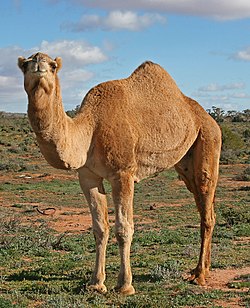
Semitic *gam(a)l- 'camel' is a widespread word which designates the dromedary of SW Asia and North Africa, first domesticated in Arabia before 2,000 BCE1, and was borrowed into Greek kámēlos and in turn into Latin camēlus


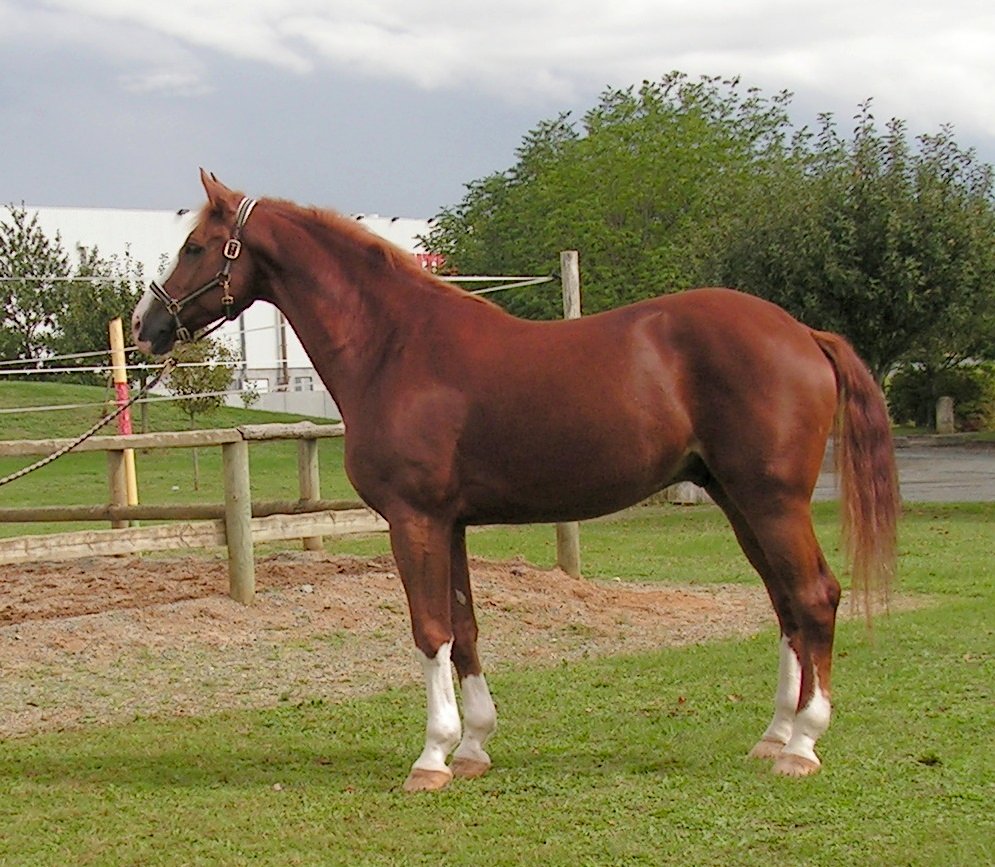
This appears to be a Wanderwort which originally designated some wild ungulate of the Eurasian steppes and which is also found in Baltic *kumel-iā̃, Slavic *kobɨ̄lā 'mare' and in Altaic (with metathesis) *kúlme 'a k. of ungulate': Turkic *Kulum 'foal', Mongolian *kulan 'Mongolian wild ass (Equus hemionus hemionus)'2Tungusic *ku(l)ma- 'maral (Siberian stag)/wapiti (Cervus canadensis)' and Japonic *kuáma 'foal, colt' aral' (EDAL 911).

A seemingly related Wanderwort for equids can be found in Caucasian *gwælV (~ -ɫ-) 'horse' (a Nakh-Tsezian isogloss) and which also designates the onager (Equus hemionus): Farsi gur 'Persian onager (Equus hemionus onager)', Hindi khur 'Indian wild ass (Equus hemionus khur)'; IE *gwold- 'foal, young of an ass' > Sanskrit gardabhá- 'ass'3Germanic *kult-a- 'colt' (English colt) an Basque zaldi 'horse'4, with assibilation of the initial velar. The latter has cognates in the Iberian antroponym formant saldu and Berber a-serdun 'mule'.


__________________________________
1 Another species of camel, the Bactrian camel, native to the steppes of Central Asia, was first domesticated before 2,500 BCE.
Borrowed by Turkic, where it designates the Turkmenian kulan (Equus hemionus kulan).
3 Tocharian B kercapo 'ass, donkey' is likely an early Indo-Arian loanword. See D.A. Adams (1999): A Dictionary of Tocharian B, p. 195-196.
4 Although some authors have proposed a link to thieldones 'a breed of Asturian ambling horses' (Pliny) < IE *del- 'to shake' (cfr. English tilt), in my opinion this is semantically unsatisfactory.

11 January 2026

Summer and apple: history of a Nostratic Wanderwort


In Greek mythology, Hēméra was the primeval goddness of the day. From this word and Armenian awr 'day', Indo-Europeanists such as Mallory-Adams1 reconstruct an IE protoform *hēm-ər- '(heat of the) day', which I link to Semitic *ħamm- 'to be hot; warm'2, with the voiceless pharyngeal fricative ħ corresponding t"laryngeal" h

It doesn't take a long stretch of the imagination to devise a derived variant *HVmV-lV/HVmVlV which gave (with metathesis) Nakh-Daghestanian *mhalV/mhanV- 'warm' and IE *mahlo- 'apple', with a straightforward semantic drift from 'warm (season)' to 'fruit'. Several IE languages of North Europe (Celtic, Germanic, Balto-Slavic) reflect a protoform *abVl- 'apple' (< *amHVl-?) which is regarded as a Paleo-European substrate loanword by some specialists.4

variant *ʕu-malV/*ʕu-manV would be the origin of Uralic *omena/omVrV 'apple' as well as  Basque udare, udari, madari 'pear'(with denasalization and further delabialization), umao (B), umo 'ripe, seasoned'.  This makes sense because the apple tree is originary of Kurdistan, precisely in the area where Nostratic was presumably spoken.

On the other hand, we've got yet another IE variant *sam-/*səm-ro- 'summer'and Hittite sam(a)lu- 'apple (tree)'.65
______________________________________
1 J.P. Mallory & Q.D. Adams (2006): The Oxford Introduction to PIE and the PIE World 
2 Also cognate are Hurrian am- 'to burn' and (possibly through an Etruscan intermediate) Latin amāre 'to love', amor 'love'.
For example, Theo Vennemann links it to Afrasian *ʔa-bul- 'male genitals', which (in his own words) is "semantically unsatisfactory although phonetically perfect". See T. Vennemann (1998): Andromeda and the Apples of the Hesperides, in Europa Vasconica, Europa Semitica, 591-652.
The ablaut form *sem- usually quoted in dictionaries isn't attested anywhere.
5 Explained by ortodox IE-ists such as Kloekhorst as the result of a "s-mobile".

20 October 2025

The Labyrinth (updated)


Greek labýrinthos (Mycenean 
DA-PU-RI₂-TO-JO 'of the labyrinth') designated an elaborated place built by the artificer Daedalus for the king Minos of Crete and whose function was to hold the Minotaur, a legendary creature half man and half bull. Although the Cretan labyrinth had a square or rectangular shape, there is an older circular version found in several ancient cultures, mostly in petroglyphs

From the Greek word, I'd reconstruct Minoan
abur 'fence, wall', with an initial voiced lateral represented as /d/ in Linear B. Seemingly related words are 
Central Chadic *ɮabˁ- 'fence, to fence', Low East Cushitic (Afar) sabsab- 'wall' (reduplicative), Egyptian ʃzp(a) 'fence',  Etruscan spur 'city'
________________________________
The Pre-Greek language spoken at Crete, attested in Linear A tablets and loanwords to Greek.

16 September 2025

Celtic *longā 'boat, vessel' (updated)


Celtic *longā 'boat, vessel' is attested in Welsh llong 'ship', Old Breton locou 'vessels, vases', Old Irish long 'vessel, (little) vase, ship', to which corresponds the Gaulish toponymic element Longo-1. There's also Cisalpine Gaulish (Todi) lokan /longan/ 'cinerary urn', an accusative form where /ng/ is rendered as k.

Although some authors have suggested a loanword (with reanalysis) from Latin nauis longa 'warship' (lit. 'long ship'), specialists such as Matasović2 think this is a genuine Celtic word without IE etymology, which I consider it to be a cultural loanword from North East Caucasian *leqˀV 'a k. of vessel' (NCED 1511), where the ejective stop became prenasalizedAlso related would be Latin lanx 'dish, plate'3, apprently borrowed from Etruscan in account of its /avocalism.

This lexeme was also borrowed into IE *lonko-/ā 'valley' > Lithuanian lankà ‘valley, rivermeadow’, Old Church Slavonic ka ‘gulf, valley, meadow, marsh’, Tocharian B leke ‘valley’, and Late Latin *lanca ‘depression, bed of a river’4, with a straightforward semantic shift.
_______________________
1 X. Delamarre (2008): Dictionnaire de la langue gauloise, p. 206-207.
2 R. Matasović (2009): Etymological Dictionary of Proto-Celtic, p. 244.
3 This meaning is reflected in Tsezian.
4 J.P. Mallory & D.Q. Adams (2006): The Oxford Introduction to Proto-Indo-European and the Proto-Indo-European World. 122.

15 March 2022

The Indo-European horses (updated)

The Indo-European word *hew-o- 'horse' (Latin equus, Greek híppos)1 has been used by defenders of the so-called Kurgan theory as part of the evidence supporting the speakers of PIE (i.e. the proto-language of the IE family)2 were the people who first domesticated the animal in the Pontic-Caspian steppes around 4,000-3,500 BC3.

However, this appears to be a Wanderwort whose earliest form can be traced to North Caucasian (Nakh-Daghestanian) *ɦɨ[n]tʃwi (~ -e) 'horse' (NCED 211) and which also spread to Sumerian anše 'donkey' and Hurrian eššǝ 'horse'. As pointed out by Uralic *ki(n)tʃe/*ky(n)tʃe 'nail, fingernail, claw', my bet is this word would have first been originally to some Pleistocene ungulates.


As pigs, sheep and goats -which together with cattle made up the Near East Neolithic package- were first domesticated around 9,000-8,000 BC in the Taurus-Zagros mountains area, it's possible for Afrasian *ʕi(n)ʒ- 'sheep, goat' (Semitic, Cushitic) and *χu(n)ʒ(-ir-) 'pig' (Semitic, Chadic)'4 to be also related.
 
Incidentally, this is the time and space framework where the linguist Allan Bomhard placed his Proto-Nostratic5, which his collegue Kerns regarded as being part of the Dene-Caucasian phylum: I believe that Nostratic languages did not exist except as a part of Dene-Caucasian until the waning of the Würm glaciation, some 15,000 years ago6However, in my view this wouldn't be the common ancestor (Mother Tongue) of a plethora of language families such as Indo-European, Afrasian or Kartvelian, but rather the source of several Neolithic Wanderwörter
_________________________________________________________________
Luwian *aššu-/*azzu- 'horse' and Georgian aču/ačua 'interjection for calling horses' are loanwords from Indo-Iranian.
See J.P. Mallory (1989): In Search of the Indo-Europeans. Language, Archaeology and Myth, p. 143-185.
3 The domesticated horse (Equus ferus caballus) is a different subspecies than the wild horse of the Eurasian steppes (Equus ferus ferus), also called tarpan (a Turkic word). There is also another subspecies native to the Eurasian steppes, the so-called Przewalski's horse (Equus ferus Przewalski's), which has never been domesticated.
4 Whose specialization could have involved phonosymbolism in the initial fricativec
5 A. Bomhard (2008): Reconstructing Proto-Nostratic. Comparative Phonology, Morphology, and Vocabulary, vol. I, p. 235-241. 
A. Bomhard & J.C. Kerns (1994): The Nostratic Macrofamily: A Study in Distant Linguistic Relationship, p. 153.