Showing posts with label Slavic. Show all posts

25 March 2026

Semitic *gam(a)l- 'camel'


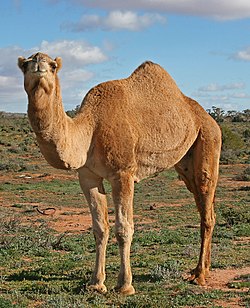
Semitic *gam(a)l- 'camel' is a widespread word which designates the dromedary of SW Asia and North Africa, first domesticated in Arabia before 2,000 BCE1, and was borrowed into Greek kámēlos and in turn into Latin camēlus


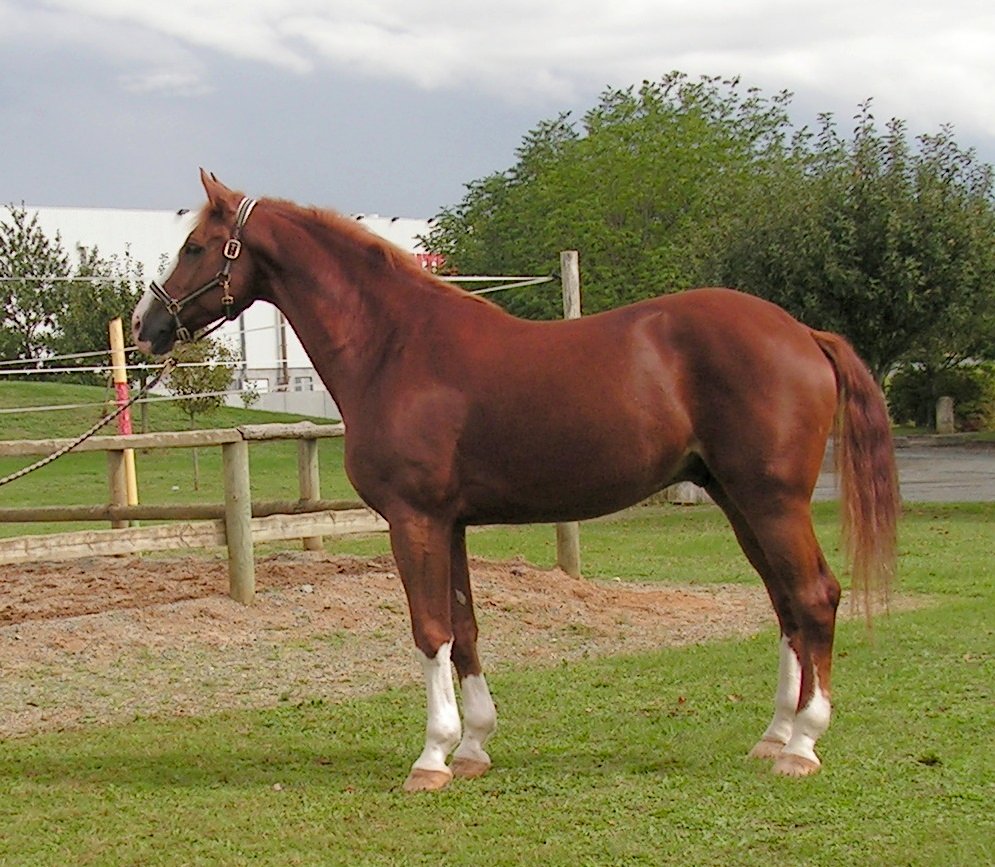
This appears to be a Wanderwort which originally designated some wild ungulate of the Eurasian steppes and which is also found in Baltic *kumel-iā̃, Slavic *kobɨ̄lā 'mare' and in Altaic (with metathesis) *kúlme 'a k. of ungulate': Turkic *Kulum 'foal', Mongolian *kulan 'Mongolian wild ass (Equus hemionus hemionus)'2Tungusic *ku(l)ma- 'maral (Siberian stag)/wapiti (Cervus canadensis)' and Japonic *kuáma 'foal, colt' aral' (EDAL 911).

A seemingly related Wanderwort for equids can be found in Caucasian *gwælV (~ -ɫ-) 'horse' (a Nakh-Tsezian isogloss) and which also designates the onager (Equus hemionus): Farsi gur 'Persian onager (Equus hemionus onager)', Hindi khur 'Indian wild ass (Equus hemionus khur)'; IE *gwold- 'foal, young of an ass' > Sanskrit gardabhá- 'ass'3Germanic *kult-a- 'colt' (English colt) an Basque zaldi 'horse'4, with assibilation of the initial velar. The latter has cognates in the Iberian antroponym formant saldu and Berber a-serdun 'mule'.


__________________________________
1 Another species of camel, the Bactrian camel, native to the steppes of Central Asia, was first domesticated before 2,500 BCE.
Borrowed by Turkic, where it designates the Turkmenian kulan (Equus hemionus kulan).
3 Tocharian B kercapo 'ass, donkey' is likely an early Indo-Arian loanword. See D.A. Adams (1999): A Dictionary of Tocharian B, p. 195-196.
4 Although some authors have proposed a link to thieldones 'a breed of Asturian ambling horses' (Pliny) < IE *del- 'to shake' (cfr. English tilt), in my opinion this is semantically unsatisfactory.

13 March 2022

Etruscan φersu 'masked character (in games)' (updated)


Latin persōna 'theatre mask' is a loanword from Etruscan *φersu-na > φersu 'masked character (in games)'. This can be analized as a derivative from an unattested form *φers 'husk', an agricultural term with correspondences in Hittite paršdu 'leaf, foliage'1, linked in turn by Alexei Kassian to Kartvelian *purtś 'husk, foliage' (Georgian purcel ’leaf, foliage', Megrel purča 'chaff, husk', Laz purča 'sweet corn ear', purčumale 'a k. of weed'), *prtś-wn- 'to husk, to scale'2.


Presumably related to this etymology is the Greek theonym Perséphonē (Etruscan Φersipnei, Latin Proserpina), attested on several Attic vases from the 5th century BC as Persóphatta, P(h)erséphatta, Pherréphatta. Rudolf Wachter analyzes it as a compound whose second member would be derived from Indo-European *-gʷhn-t-jā < *gʷhen- 'to beat, to kill', and the first one related to Sanskrit parṣá- 'sheaf, bundle', Young Avestan parša- 'ear (of corn)', to which Michael Weiss -in a personal communication to Wachter- also adds Latin porrum and Greek práson 'leek', from a supposed Indo-European lexeme *pr̥s-o-'3. Thus the reconstructed meaning of the theonym would be 'sheaf-beater', i.e. 'threshing maiden'4. 


However, like most Indo-Iranian lexicon related to agriculture, *parš appears to be a substrate loanword from the language spoken by BMAC people5. On the other hand, for Slavic *proso- 'millet', Georg Holzer posited a loanword from a substrate language he called Temematic (Temematisch in German) after its proposed sound correspondences with PIE and where *r̥ ro6. Although Holzer's theory has been discredited as a whole7 it could still explain the etymology of the Slavic word from I*bhar(e)s 'a k. of cereal (milletbarleyspelt)' (Latin far, farris), a remnant of the languages spoken by the Neolithic farmers who colonized Europe from the Near East.

________________________________________________________
Wrongly translated by some authors as 'sprout, sprig'. See A. Kloekhorst (2008): Etymological Dictionary of Hittite, pp. 645-646. 
A. Kassian (2009): Anatolian lexical isolates and their external Nostratic cognates, in Orientalia et Classica, §48.
M. De Vaan (2008): Etymological Dictionary of Latin and the Other Italic Languages, pp. 481-482.
R. Wachter (2006): Persephone, the Threshing Maiden, in Die Sprache, vol. 47, no. 2 (2007-2008), pp.163-181.
5 M. Witzel (2003): Linguistic Evidence for Cultural Exchange in Prehistoric Western Central Asia, in Sino-Platonic Papers 129, p. 33.
G. Holzer (1989): Entlehnungen aus einer bisher unbekannten indogermanischen Sprach in Urslavischen und Urbaltischen, §2. See also F. Kortland (2003): An Indo-European substratum in Slavic?, in Languages in Prehistoric Europe, pp. 183-184.
R. Matasović (2013): Substratum words in Balto-Slavic, in Filologija 60, pp. 75-102.