1 J.P. Mallory & Q.D. Adams (2006): The Oxford Introduction to PIE and the PIE World.
11 January 2026
Summer and apple: history of a Nostratic Wanderwort
1 J.P. Mallory & Q.D. Adams (2006): The Oxford Introduction to PIE and the PIE World.
13 March 2022
Etruscan φersu 'masked character (in games)' (updated)
Presumably related to this etymology is the Greek theonym Perséphonē (Etruscan Φersipnei, Latin Proserpina), attested on several Attic vases from the 5th century BC as Persóphatta, P(h)erséphatta, Pherréphatta. Rudolf Wachter analyzes it as a compound whose second member would be derived from Indo-European *-gʷhn-t-jā < *gʷhen- 'to beat, to kill', and the first one related to Sanskrit parṣá- 'sheaf, bundle', Young Avestan parša- 'ear (of corn)', to which Michael Weiss -in a personal communication to Wachter- also adds Latin porrum and Greek práson 'leek', from a supposed Indo-European lexeme *pr̥s-o-'3. Thus the reconstructed meaning of the theonym would be 'sheaf-beater', i.e. 'threshing maiden'4.
However, like most Indo-Iranian lexicon related to agriculture, *parš appears to be a substrate loanword from the language spoken by BMAC people5. On the other hand, for Slavic *proso- 'millet', Georg Holzer posited a loanword from a substrate language he called Temematic (Temematisch in German) after its proposed sound correspondences with PIE and where *r̥ > ro6. Although Holzer's theory has been discredited as a whole7 it could still explain the etymology of the Slavic word from IE *bhar(e)s 'a k. of cereal (millet, barley, spelt)' (Latin far, farris), a remnant of the languages spoken by the Neolithic farmers who colonized Europe from the Near East.
07 November 2015
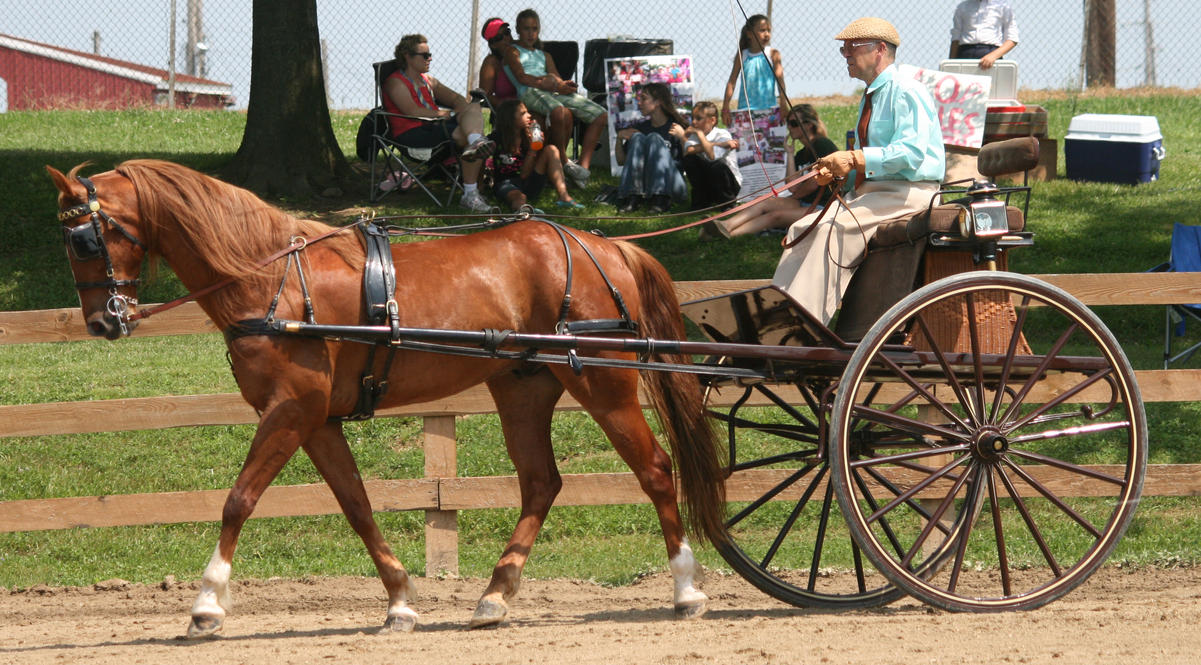
The horse goes before the cart (updated)
29 October 2015
Gaulish *agranio- 'sloe, fruit of the blackthorn' (updated)
| Sloes |
| A bottle of home-made patxaran |
A popular liquor made from sloes is called patxaran (Spanish pacharán), a compound from pattar 'liquor' which coalesced (popular etymology) with the High Navarrese name of the fruit, a variant of ba(i)saran (G), baixaran (S), maisaran (R), basahan (Z), paxaran (HN, Aezk, R), a compound from basa- 'wild' and aran.
The corresponding form in Insular Celtic is *agriniā (Old Irish áirne, Welsh eirin), although phonetic differences make impossible to reconstruct a single Celtic protoform. IE cognates are Germanic *akarna-/*akrana-/*akirna- 'acorn'2, Latin agresta 'green grape', agrestis and Greek ágrios 'wild', which have nothing to do with 'field' (Latin ager, Greek agrós) in despite of their resemblance.
| Oak acorns |
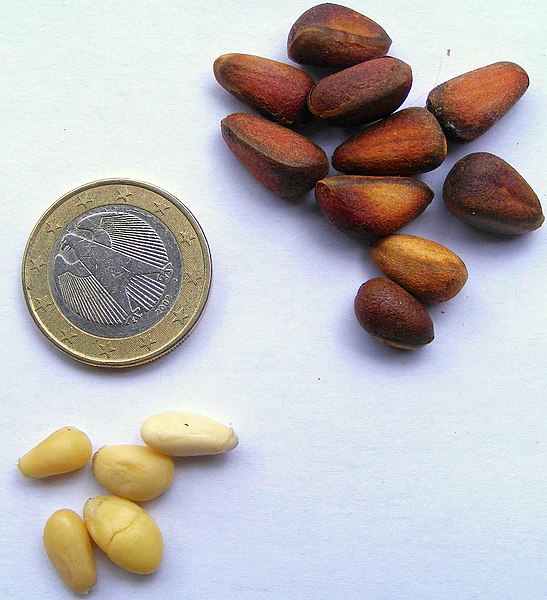
The scarce attestation within IE and the semantic latitude point to a Paleo-European substrate loanword which I'd link (with loss of the initial nasal) to Uralic *nakrV 'cedar nut'3, and possibly also to Altaic *ɲíkrV 'a k. of thorny tree', Eskimo *(Nǝ)k[r]uʁa- (~ *Nǝkǝvʁa-) 'tree, spruce'.
| Cedar nuts (with and without shell) |
1 The Gipuzkoan form is txaran. In these Westernmost dialects, 'plum' is okaran, apparently from an anaptyctic form *akarann.
19 September 2015
Galician-Portuguese silva 'bramble' (updated)
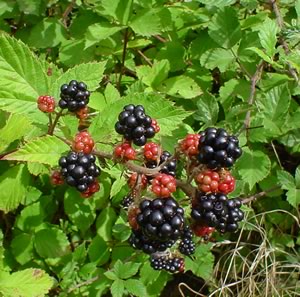
| Blackberries |
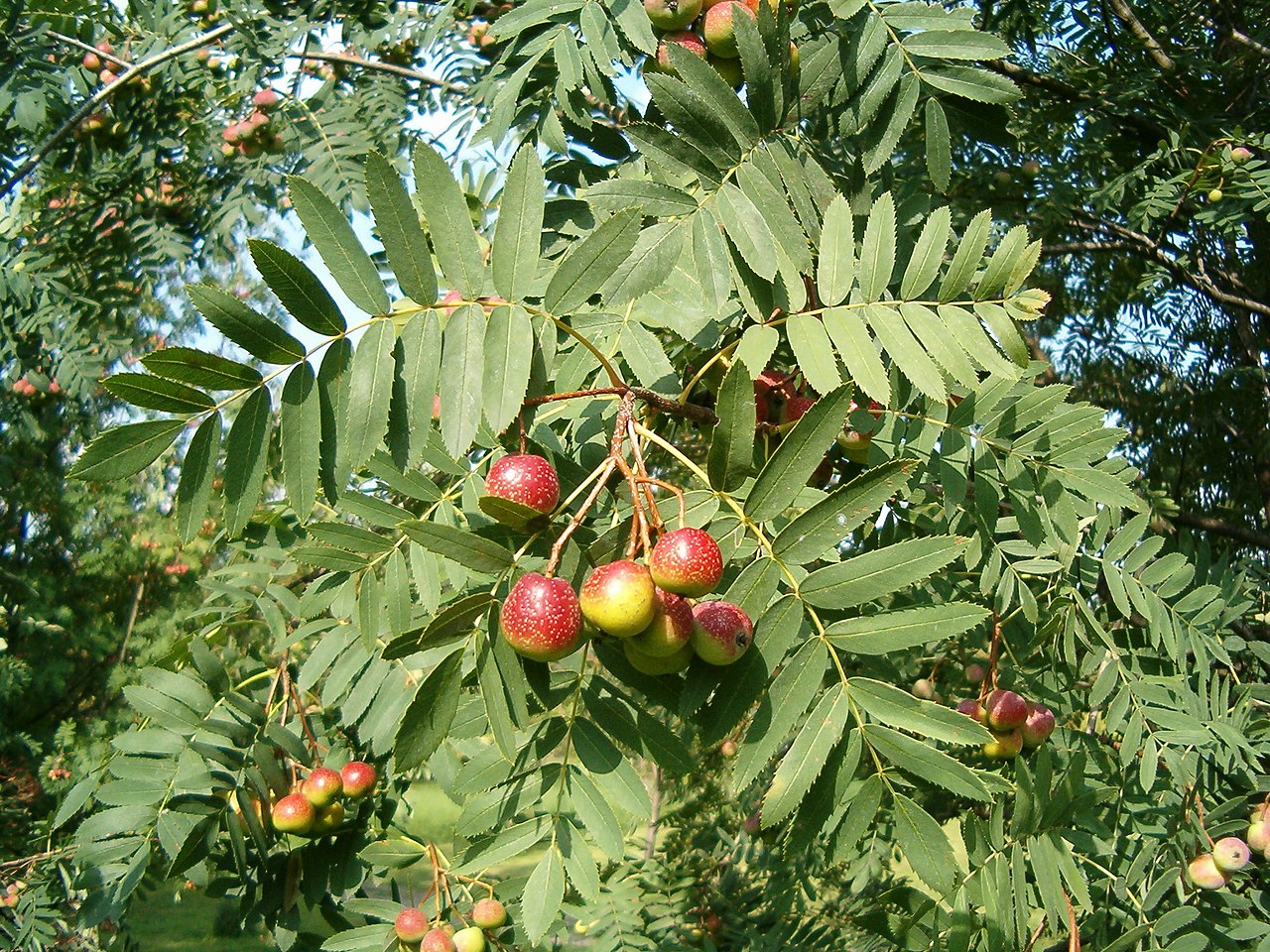
| Service berries |
Although these forms show the typical IE ablaut e ~ o6, we also can find variants with /u/ vocalism: Leonese (Liébana) surba 'service berry', surbu (collective) 'service tree' and regional Spanish (Álava, Bureba, High Rioja) zurba, zurbia 'service berry', zurbal, zurbial, surbial (collective) 'service tree'.
________________________________________________________
2 J. Oria de Rueda et al. (2006): Botánica forestal del género Sorbus en España, in Investigación Agraria. Sistema y recursos forestales, vol. 15, nº 1, p. 166-186.
4 The forms serbo, jerbo, selbo, jelbo are the product of a contamination with sorbo.
5 M. Vasmer (1955): Russisches Etymologisches Wörterbuch, p. 697.
10 October 2014
Is really Tartessian a Celtic language? (newly updated)

A major difficulty regarding the Tartessian corpus is the semisyllabic SW script (where vowels are redundantly noted) hasn't yet been fully deciphered and thus the exact value of some signs is still unknown or problematic. For example, Koch assigns the sign H (Phoenician het, Greek epsilon) to the Proto-Celtic voicess bilabial fricative [ɸ] (almost universally lost in historical Celtic languages) coming from IE *p, as in e.g. Hatªaneatᵉe. However, the correspondence between Tartessian Haitᵘura1 and Iberian baiduŕa2, the later seemingly related to baides 'witness', in turn derived from IE *weid- 'to see; to know (as a fact)' (cfr. Celtiberian ueizos), points to the the value /w/ (Greek digamma).
If this is correct and the word is native to Tartessian, it would indicate it's an IE language although certainly a non-Celtic one. A good possibility would be the Paleo-European (after Krahe's Alteuropäische) substrate identified by the Spanish Indo-Europeanist Francisco Villar in the ancient Iberian toponymy, where we find the lexeme *akʷā 'river'3 (see here) used as a suffix (e.g. Turaqua).
3 Not 'water' (cfr. Latin aqua) as commonly thought.

.jpg)