1 J.P. Mallory & Q.D. Adams (2006): The Oxford Introduction to PIE and the PIE World.
11 January 2026
Summer and apple: history of a Nostratic Wanderwort
1 J.P. Mallory & Q.D. Adams (2006): The Oxford Introduction to PIE and the PIE World.
13 March 2022
Etruscan φersu 'masked character (in games)' (updated)
Presumably related to this etymology is the Greek theonym Perséphonē (Etruscan Φersipnei, Latin Proserpina), attested on several Attic vases from the 5th century BC as Persóphatta, P(h)erséphatta, Pherréphatta. Rudolf Wachter analyzes it as a compound whose second member would be derived from Indo-European *-gʷhn-t-jā < *gʷhen- 'to beat, to kill', and the first one related to Sanskrit parṣá- 'sheaf, bundle', Young Avestan parša- 'ear (of corn)', to which Michael Weiss -in a personal communication to Wachter- also adds Latin porrum and Greek práson 'leek', from a supposed Indo-European lexeme *pr̥s-o-'3. Thus the reconstructed meaning of the theonym would be 'sheaf-beater', i.e. 'threshing maiden'4.
However, like most Indo-Iranian lexicon related to agriculture, *parš appears to be a substrate loanword from the language spoken by BMAC people5. On the other hand, for Slavic *proso- 'millet', Georg Holzer posited a loanword from a substrate language he called Temematic (Temematisch in German) after its proposed sound correspondences with PIE and where *r̥ > ro6. Although Holzer's theory has been discredited as a whole7 it could still explain the etymology of the Slavic word from IE *bhar(e)s 'a k. of cereal (millet, barley, spelt)' (Latin far, farris), a remnant of the languages spoken by the Neolithic farmers who colonized Europe from the Near East.
19 September 2015
Galician-Portuguese silva 'bramble' (updated)
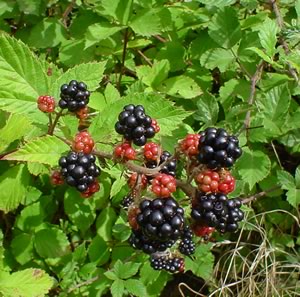
| Blackberries |
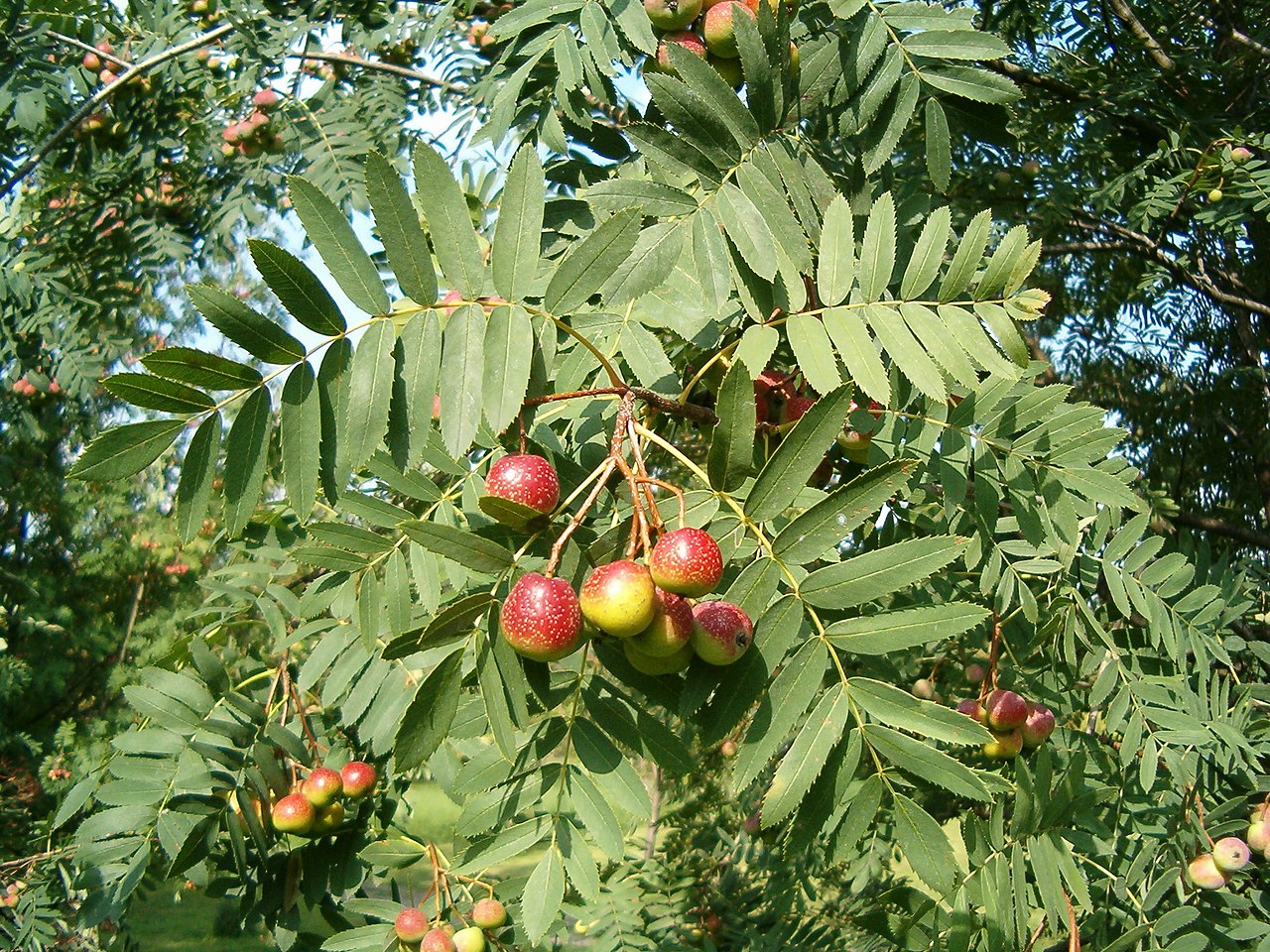
| Service berries |
Although these forms show the typical IE ablaut e ~ o6, we also can find variants with /u/ vocalism: Leonese (Liébana) surba 'service berry', surbu (collective) 'service tree' and regional Spanish (Álava, Bureba, High Rioja) zurba, zurbia 'service berry', zurbal, zurbial, surbial (collective) 'service tree'.
________________________________________________________
2 J. Oria de Rueda et al. (2006): Botánica forestal del género Sorbus en España, in Investigación Agraria. Sistema y recursos forestales, vol. 15, nº 1, p. 166-186.
4 The forms serbo, jerbo, selbo, jelbo are the product of a contamination with sorbo.
5 M. Vasmer (1955): Russisches Etymologisches Wörterbuch, p. 697.
09 August 2014
Latin aqua 'water' (updated)
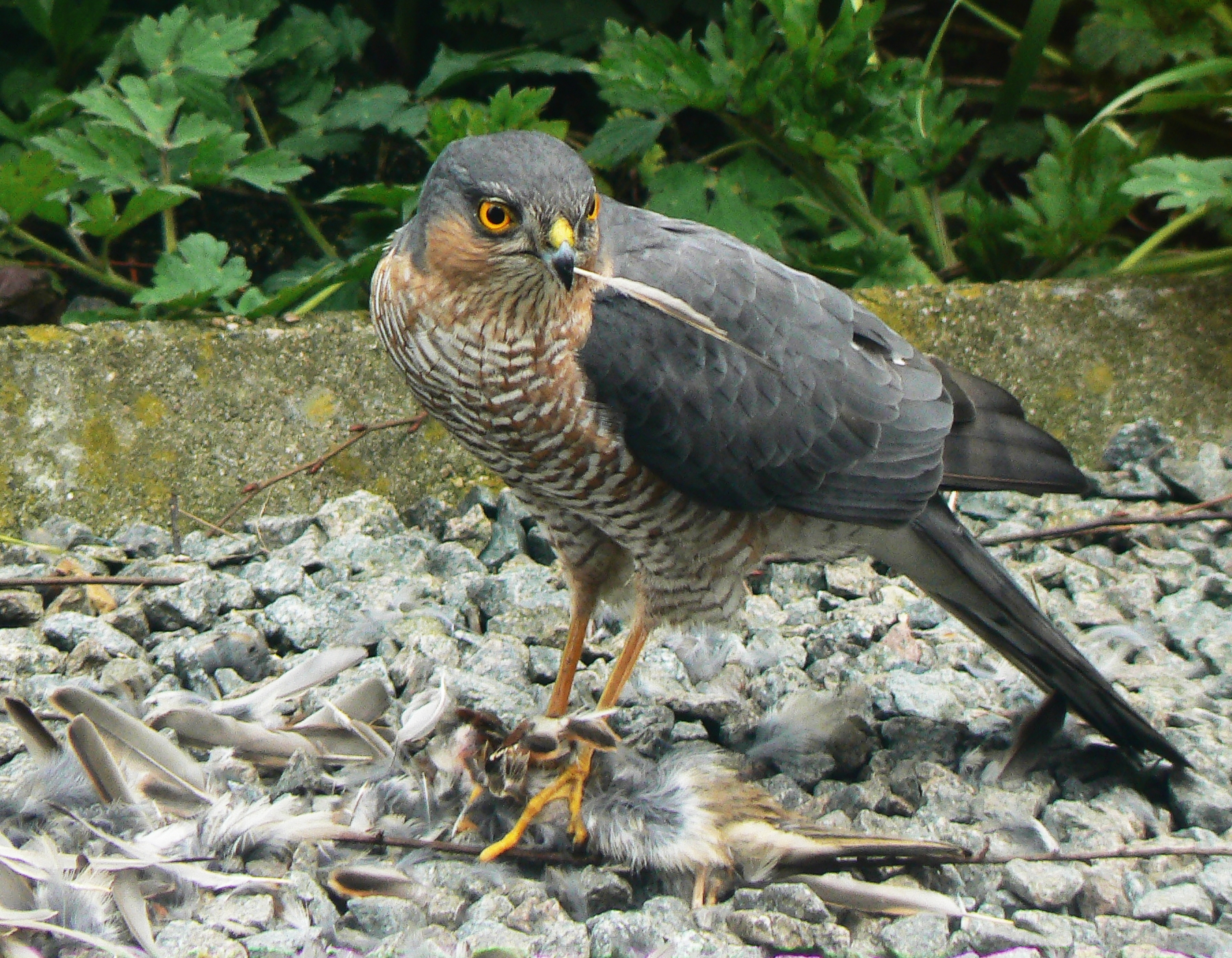
Apparently, *akʷā would be a derivated noun from the adjective *aku- 'quick, fast', found in Latin acupedius 'swift of foot' and accipiter 'hawk', the latter with cognates in Greek ōkýpteros, literally meaning 'swift flyer' (ōkýs 'swift', pterón 'wing'), and Sanskrit āśu-pátvan- 'flying swiftly'4. These correspondences suggest Paleo-European *aku- would correspond to late IE *ōḱu- 'quick' > Latin ōcior.
1 P. de Bernardo Stempel (2007): Water in the Botorrita Bronzes and Other Inscriptions, in Palaeohispanica 7, pp. 55-69.
2 Despite so, it has been compared it to other 'water' words, both within the IE family and oustide, even up to the point of building upon it a "global etymology" (Ruhlen).