Showing posts with label Baltic. Show all posts

25 March 2026

Semitic *gam(a)l- 'camel'


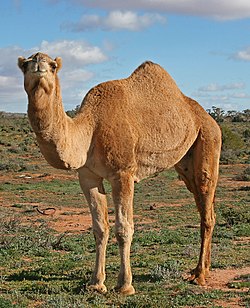
Semitic *gam(a)l- 'camel' is a widespread word which designates the dromedary of SW Asia and North Africa, first domesticated in Arabia before 2,000 BCE1, and was borrowed into Greek kámēlos and in turn into Latin camēlus. 


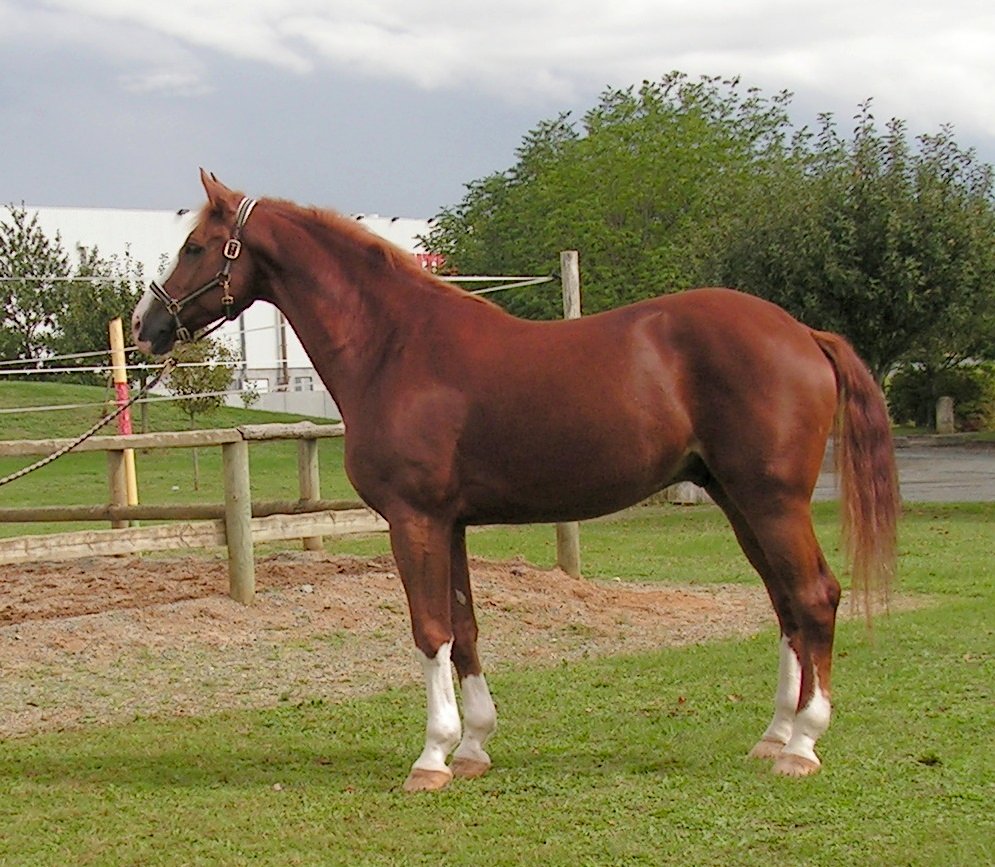
This appears to be a Wanderwort which originally designated some wild ungulate of the Eurasian steppes and which is also found in Baltic *kumel-iā̃, Slavic *kobɨ̄lā 'mare' and in Altaic (with metathesis) *kúlme 'a k. of ungulate': Turkic *Kulum 'foal', Mongolian *kulan 'Mongolian wild ass (Equus hemionus hemionus)'2, Tungusic *ku(l)ma- 'maral (Siberian stag)/wapiti (Cervus canadensis)' and Japonic *kuáma 'foal, colt' aral' (EDAL 911).

A seemingly related Wanderwort for equids can be found in Caucasian *gwælV (~ -ɫ-) 'horse' (a Nakh-Tsezian isogloss) and which also designates the onager (Equus hemionus): Farsi gur 'Persian onager (Equus hemionus onager)', Hindi khur 'Indian wild ass (Equus hemionus khur)'; IE *gwold- 'foal, young of an ass' > Sanskrit gardabhá- 'ass'3, Germanic *kult-a- 'colt' (English colt) an Basque zaldi 'horse'4, with assibilation of the initial velar. The latter has cognates in the Iberian antroponym formant saldu and Berber a-serdun 'mule'.


__________________________________
1 Another species of camel, the Bactrian camel, native to the steppes of Central Asia, was first domesticated before 2,500 BCE.
2 Borrowed by Turkic, where it designates the Turkmenian kulan (Equus hemionus kulan).
3 Tocharian B kercapo 'ass, donkey' is likely an early Indo-Arian loanword. See D.A. Adams (1999): A Dictionary of Tocharian B, p. 195-196.
4 Although some authors have proposed a link to thieldones 'a breed of Asturian ambling horses' (Pliny) < IE *del- 'to shake' (cfr. English tilt), in my opinion this is semantically unsatisfactory.

05 August 2014

Gaulish *santikā 'ladle; milking vessel' (updated)


Gascon sanja, sansha, santja, sòntja, shansha, sancha, Aragonese sancha and dialectal Catalan sanxa (Cerdanya) designate a milking vessel carved in wood, often made by hollowing out a tree trunk1. On the other hand, dialectal Basque xantxa (L, Z), xaiñtxa (Z) designates a milking vessel with a long metal handle (kopetxa), and in the latter also 'ladle' (golhare), a meaning which in my opinion would be the original one2.

Although the Gaulish origin of this word seems undeniable, a Celtic etymology is more dubious. For example, Matasović proposes a Celtic femenine *sϕanjā corresponding to the masculine *sϕenjo- > Old Irish sine 'teat'3, in turn derived from IE *spen-, which is phonetically unacceptable, among other things because Celtic *sϕ- gives s- in Goidelic but f- in Britonic and probably also in Gaulish. For the same reason, Hubschmid's protoform *sand-ikā from IE *spn̥dh- 'bucket'4 can't be accepted, although Celtic *sϕondā would be the origin of Romansh s(u)onna 'bucket', probably a Lepontic loanword.


Following Coromines5, I'd propose a Gaulish protoform *santi-kā as a Baltoid loanword corresponding to Baltic *samti-/semti- > Lithuanian sámtis 'spoon, ladle', sémti 'to pump, to scoop (a liquid)', from an IE root *semH- 'to pump, to scoop (a liquid)' also found in Latin sentīna 'bilge; sewer, drainage' and cognate to Altaic *ʃŏ́mo 'to dive; to summerge; to scoop (a liquid)' (EDAL 2193) > Turkic *tʃo:(m)- 'to diver; to swim; to scoop (a liquid); to immerse, to dip' (Turkish čömče 'spoon'6). On the other hand, Etruscan śanti (Tabula Capuana) probably designated some kind of vessel.
___________________________________________
1 G. Rohlfs (1970): Le Gascon. Etudes de phylologie pyrénéenne, § 59. It's likely the same kind of vessel called kaiku in Basque.
2 The oldest European metal ladlers are from the Hallstatt culture of the Early Iron Age.
3 R. Matasović (2009): Etymological Dictionary of Proto-Celtic, p. 333.
4 J. Hubschmid (1951): Alpenwörter. Ursprungs und vorromanischen Romanischen, p. 61.
5 DECLC, p. 667-668.
6 J. Hubschmid (1955): Schläuche und Fasser, p. 107, quotes čamča, čumča with a diminutive suffix -ča.

24 July 2014

French bourbe 'sludge' (updated)


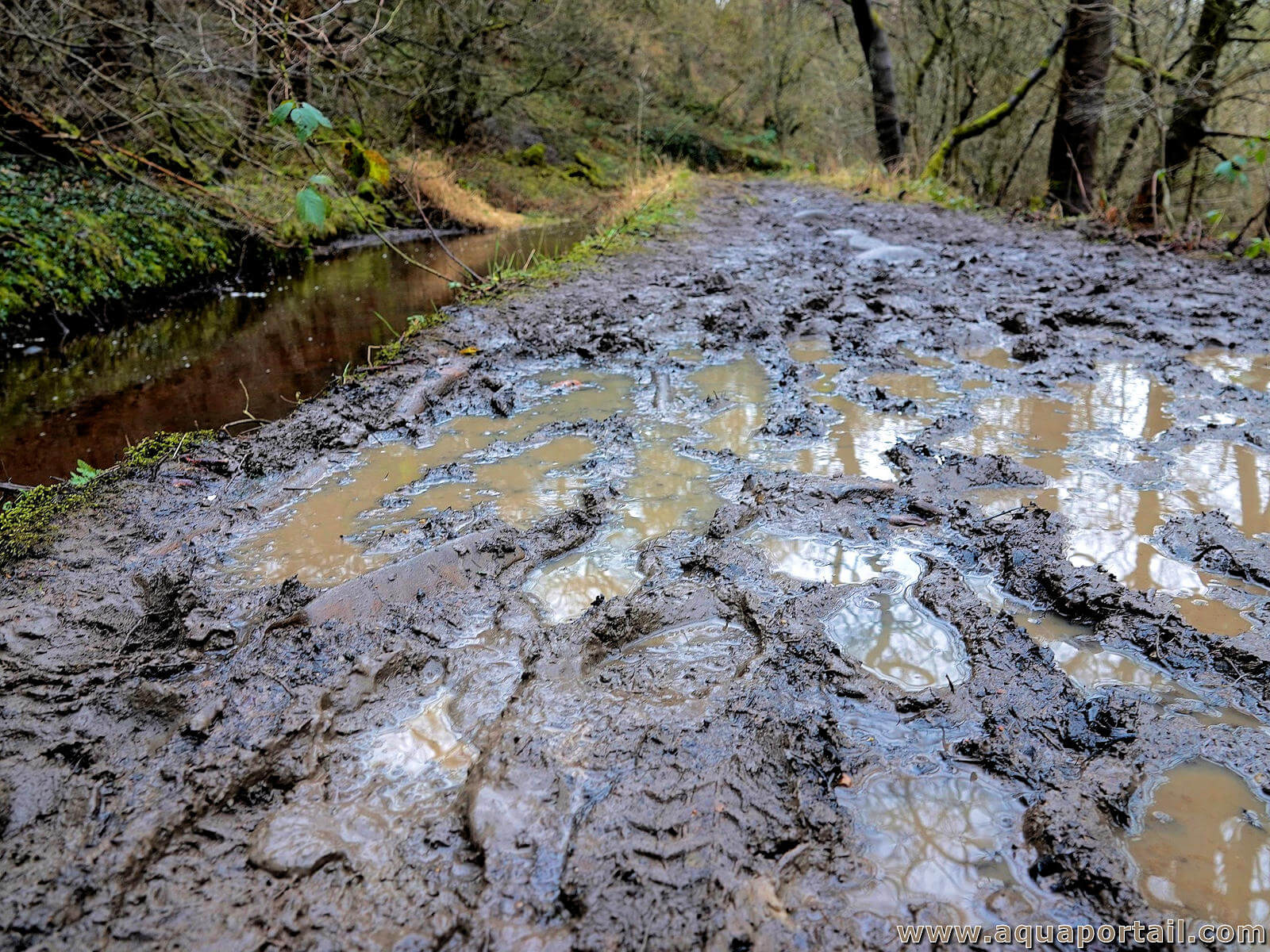
French bourbe 'sludge' (collective form bourbier) designates a kind of dark, thick mud deposited by stagnant or waste waters and surely derives from 
Gaulish *borwā (f.), whose supposed meaning 'hot, boiling spring' accroding to standard dictionaries, which link it to Welsh berwi, Breton bervi 'to boil'1. 

However, in my opinion this etymology is semantically unsatisfactory, and I'd prefer a substrate loanword from Baltic *purwā > Lithuanian pũrva 'smudge, dregs', Latvian pùrvs, purve 'morass, swamp', a word with parallels in Indo-Aryan: Sanskrit púrīṣa- 'crumbling or loose earth, rubbish; feces, excrement, ordure', Sinhalese puraṇa 'fallow or waste land'. 
______________________________
1 X. Delamarre (2008): Dictionnaire de la langue gauloise, pp. 82-83.

Gaulish *komboro- 'heap, accumulation' (updated)


Basque gonburu (B), bonburu (B) 'excess', mukuru, mukurru, mukurri, mukuro 'excess; heap, summum', usually derived from Latin cumulu- 'heap', is actually a loanword from Gallo-Romance *komboro- 'heap, accumulation'1 (REW 2075). This is the origin of Medieval Latin combrus 'abatis' (an obstacle formed by a row of tree branches pointing to the enemy) and Old French combre 'dam on a river'. Other derivatives, we we've also got French encombrer, Italian ingombrare 'to obstruct, to block' < *in-comb(o)rāre and Spanish escombrar 'to disembarrass' < *ex-comb(o)rāre. 

Although specialists usually give this word a Celtic etymology from Celtic *kom-bero-2 > Old Irish commar, Welsh cymer, Breton kemper (hence the toponym Quimper) 'confluence (of rivers)', in my opinion this etymology is semantically unsatisfactory,  so I'd prefer a substrate loanword related to Baltic *kumb(u)r- 'soil elevation, hill' (Lithuanian kumbrī̃s, kum̃bris, Latvian kumburis) and Thracian skumbras (ancient toponyms Skóumbros, Skoũmbro)3. As the source language (either from the Baltic group or a close relative of it), had no differentiated /a, o/ vowels but only /a/, its /u/ was actually realized [ʊ] and therefore was interpreted by Celtic (Gaulish) speakers as being closer to their own /o/4.


Working independently of each other, the Catalan linguist Joan Coromines and the Spanish Indo-Europeanist Francisco Villar apparently conflated this Baltoid language with a different Italoid (i.e. akin to Italic) one, called Sorothaptic by Coromines from its purported association with the Urnfield culture, attested in several lead foil inscriptions (written in Latin alphabet) found at the beggining of the 20th century in the thermal station of Amélie-les-Bains/Els Banys d'Arles (Rosselló)5. These are votive texts addressed to some water deities (nymphs) referred to as kantas niskas, where kantas presumably derives from IE *k´wen-to- 'holy' and niskas could be related to Basque neska 'unmarried girl'.
________________________________________________________
1 A meaning proposed by Coromines instead of Meyer-Lübke's original one. 
2 X. Delamarre (2008): Dictionnaire de la langue gauloise, p. 122. 
3 I. Duridanov (1969): Die Thrakisch- und Dakisch-Baltischen Sprachbeziehungen, p. 93.
4 Villar has an idiosyncratic theory of the development of the 5 vowel system of some IE languages (e.g. Italic, Celtic, Greek) from an older 4 vowel system /i, ε, ɑ, ʊ/ found in e.g. Anatolian, Balto-Slavic, Germanic, as well as in Etruscan. See F. Villar (2000): Indoeuropeos y no indoeuropeos en la Hispania prerromana, pp. 369-378.
5 J. Coromines (1976): Els ploms sorotàptics d'Arles, in Entre dos llenguatges (II), pp. 142-216. Lusitanian, a language attested on several inscriptions written in the Latin alphabet, would also belong to this group.

05 July 2014

Greek parthénos 'virgin, unmarried girl' (updated)

Goddess Britomartis

Greek parthénos 'virgin, unmarried girl' is an interesting word with no clear Indo-European etymology, although the German Indo-Europeanist Gert Klingenschmitt1 has proposed a derivation from *pr̥-sténos '(having) protunding breasts', a compound of *pr̥- 'before' and *sténos 'breast' (Avestan fštāna-) < IE *psten(o)- parallel to Avestan ərəduua-fšnī- 'having firm breasts'.

Despite being accepted by some specialists2, to me this proposal is phonetical and semantically implausible, so I regard this word as a kinship term with parallels in Old Prussian mārtin, mārtan 'bride', Lithuanian martì ‘bride, daughter-in-law’, Latvian mā̀rša 'brother's wife', Crimean Gothic marzus ‘wedding’, apparently a Wanderwort found in Eteocretan *marti-/*marpi- 'virgin/maiden' (cfr. the Goddess Britomartis 'Sweet Virgin/Maiden'), Etruscan marθ 'bride' (in papac marθc svlisva 'the wills of the grandfather and the bride')3, and ultimately related to East Caucasian (Nakh-Daghestanian) *bHaddɮi (~ -ǝ-) 'young (of animals)'4, with cognates in Proto-Altaic *bāla 'child, young' and PIE *pelH- 'foal' (Greek pôlos 'foal', Armenian ul 'kid, young of deer or gazelle', Albanian pelë 'mare')7

In my opinion, this is the likely source of Sanskrit pr̥̥thuka- 'calf, young of an animal', Armenian ortc 'young of cattle or deer' and Greek pórtis 'calf, young heifer', pórtaks 'calf'5, linked by Thomas Burrow6 to parthénos. The semantic shift from 'heifer' to 'virgin, unmarried girl' would be explained in the context of a pastoralist society like those of Kurgan people. Also related would be Germanic *farzá-, *farzḗn, *fársō(n) 'bull, ox' and Slavic *porsъ 'bull'.
______________________________________________________________
1 G. Klingenschmitt (1974): 'Grieschisch παρθένος', in Antiquititae Indogermanicae. Gedenkschrift für Hermann Güntert, pp. 273-278. 
2 R.S.P. Beekes (2010): Etymological Dictionary of Greek, p. 1153. See also X. Delamarre (2008): Gauloises Ardasina, Titiluxsa, Uxesina, grec parthénos, avestique ərəduuafšnī-. Une dénomination indo-européenne de la jeune femme: 'celle qui ha les seins hauts'.
3 A. Morandi (1987): La tomba degli Scudi di Tarquinia [Contributo epigrafico per l'esegesi dei soggetti], in Mélanges d'École française de Rome. Antiquité, p. 104.
4 Diakonoff-Starostin link to this Hurrian pōra-(m)mi, Urartian porā 'slave'. See I. Diakonoff & S. Starostin (1986): Hurro-Urartian as an Eastern Caucasian Language, §2.
5 Also related are Old Church Slavonic za-prъtъkъ 'wind egg', Czech s-pratek 'premature calf' (Pokorný).
6 T. Burrow (1955): The Sanskrit Language, p. 71. 
7 J. Mallory & D. Adams (2006): The Oxford Introduction to PIE and the PIE world, p. 192.