Showing posts with label Semitic. Show all posts

10 October 2016

Latin costa 'rib; side, flank' (updated)


Latin costa 'rib; side, flank' has been traditionally linked by Indo-Europeanists to Old Church Slavonic kostĭ 'bone'1although more recently De Vaan considers this etymology to be dubious, among other reasons because of semantic mismatch2

In fact, the Slavic word is undoubtedly related to IE *h2osth1- 'bone', although its initial velar stop can't be accounted for in the mainstream model3. The amateur linguist Glen Gordon proposes an early borrowing from a femenine variant of Semitic *kˀa(w)ʃ- 'bow'4 (cfr. Phoenician qšt5)with a semantic drift 'bow' > 'rib' > 'bone'.

In most Romance languages except Romanian, the anatomical meaning of costa was transferred to diminutive forms (e.g. Spanish costilla, French côtelette), while the main word specialized into geographical meanings: '(hill) slope' (e.g. Spanish cuesta) and 'shore' (Catalan and Italian costa), which spread as WanderwortSpanish costa, English coast, Dutch and Swedish kust, German Küste, Danish kyst, etc. There are in addition Middle High German Gestade 'bank' and Old Irish ces 'flank, rump steak', césán 'flanks', which can't be readly derived from costa although they're semantically and phonetically close. 

This makes me wonder if all these words could be Semitic borrowings akin to or from Phoenician qsˁt 'edge, limit' (f.)6 < Semitic *kˀītʃˀ 'end, to finish' < Afrasian *kˀajatʃˀ- (HSED 1562), with Latin and German having got the femenine variant and Goidelic the masculine one.
____________________________________________ 
1 A. Ernout & A. Meillet (1959): Dictionnaire étymologique de la langue latine, p. 146.
2 M. De Vaan (2008): Etymological Dictionary of Latin and the other Italic Languages, p.140. 
3 Gamkrelidze-Ivanov regard these as different reflexes of a former *qʰ. See Gamkrelidze & V.V. Ivanov (1995): Indo-European and the Indo-Europeans, pp. 111-113.
Mª J. Estanyol (2008): Diccionari abreujat fenici-català, p 113.
6 Mª J. Estanyol, op. cit., p 112.

12 July 2014

Greek kédros 'cedar', Latin citrus 'thuja; citron'


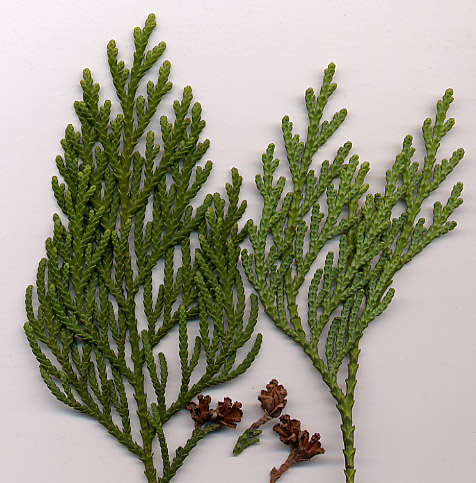
As most terms related to Mediterranean flora, Greek kédros 'cedar' (borrowed into Latin cedrus) has no IE etymology. There're also the derivatives kédris, kédron 'juniper berry' (actually a modified conifer cone).


On the other hand, Latin citrus, which designates two different kinds of tree, 'thuja(citrum 'thuja wood') and 'citron'1, is somehow related to the Greek word, possibly through an Etruscan intermediate2.


In my opinion, these are instances of a Wanderwort of Semitic origin: *kˁtr- 'smoke, incense', referring to the aromatic characteristics of these trees, either the wood (cedar, thuja) or the fruit (citron). 
______________________________
1 Whose Greek names kítron, kítrion, kítrea, are seemingly loanwords from Latin.
2 A. Ernout & A. Meillet (1959): Dictionnaire étymologique de la langue latine, pp. 123-124.

19 September 2013

Spanish jara 'rock rose; low bushes' (updated)


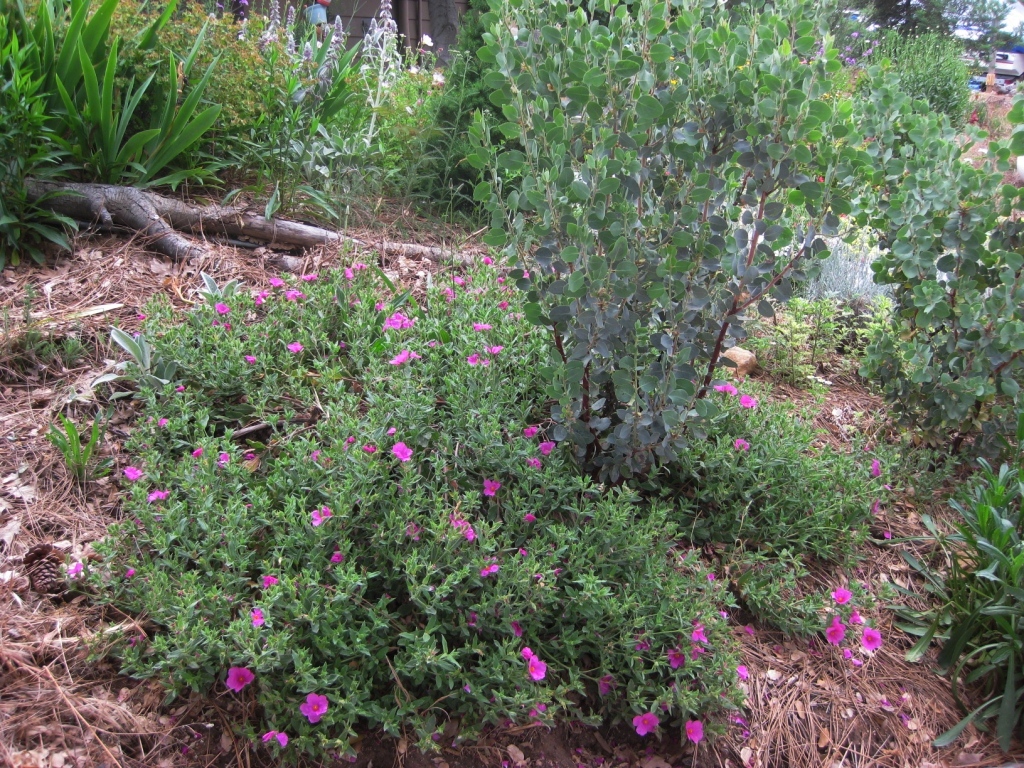
Spanish jara (old xara) 'rock rose (Cistus); low bushes' designates several species of perennial shrubs common in the Mediterranean area, especially Cistus ladanifer, which in other Hispano-Romance languages and Moroccan Arabic are designated with derivatives of Hispanic Latin stip(p)a.

The Spanish word has correspondences in Portuguese (en)xara 'low bushes' and Galician xara, Basque xara, txara, zara 'rock rose', and it's a borrowing from Hispano-Arabic ʃáʕra (Classical ʃaʕrāʔ) 'thicket, wood'1. The Arabic word is in turn related to ʃaʕār- 'thick and interlaced trees which give shadow in summer and shelter in winter; vegetation', ʃaʕīr 'barley' < Semitic *ɬaʕVr- 'barley; grass, straw' (ND 2219), contaminated with ʃaʕr- 'hair' < Semitic *ɬaʕr- 'hair' (ND 2220).
__________________________________
1 F. Corriente (2003): Diccionario de arabismos y voces afines en iberorromance, p. 307-308.

02 June 2013

Semitic *gVbVl- 'mountain; boundary, border'


Etymological dictionaries of Proto-Indo-European (PIE) such as Mallory-Adams1 reconstruct two words for 'head', namely *ɣeβōl- (Tocharian, Greek, Germanic2) and *kapōl-o- (Old English hafola, Sanskrit kapá:la-), which show an alternation between voiced (traditional voiced aspirated) and voiceless stops3.

I consider these words to be loanwords from Semitic *gVbVl- 'mountain; boundary, border' (e.g. Arabic ʒabal 'mountain'), with a straightforward semantic shift. The Semitic word is in turn derived from Afrasian *gVbVl- 'bank, side' (Militarev), also reflected in Egyptian and Western Chadic and possibly related to *gab- 'side, bank; beach' (HSED 856).
________________________________________________________________________ 
J.P. Mallory & Q.D. Adams (2006): The Oxford Introduction to PIE and the PIE world, p. 174.
2 Although the Germanic meaning is 'gable'.
Although pairs like this (e.g. *gab- ~ *kap- 'to take') are by no way uncommon, they aren't explained in the framework of mainstream IE studies.

26 April 2013

Semitic *gam(a)l- 'camel'


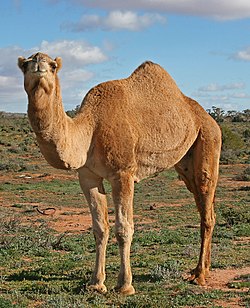
Semitic *gam(a)l- 'camel' is a widespread word which designates the dromedary of SW Asia and North Africa, first domesticated in Arabia before 2,000 BCE1, and was borrowed into Greek kámēlos and in turn into Latin camēlus

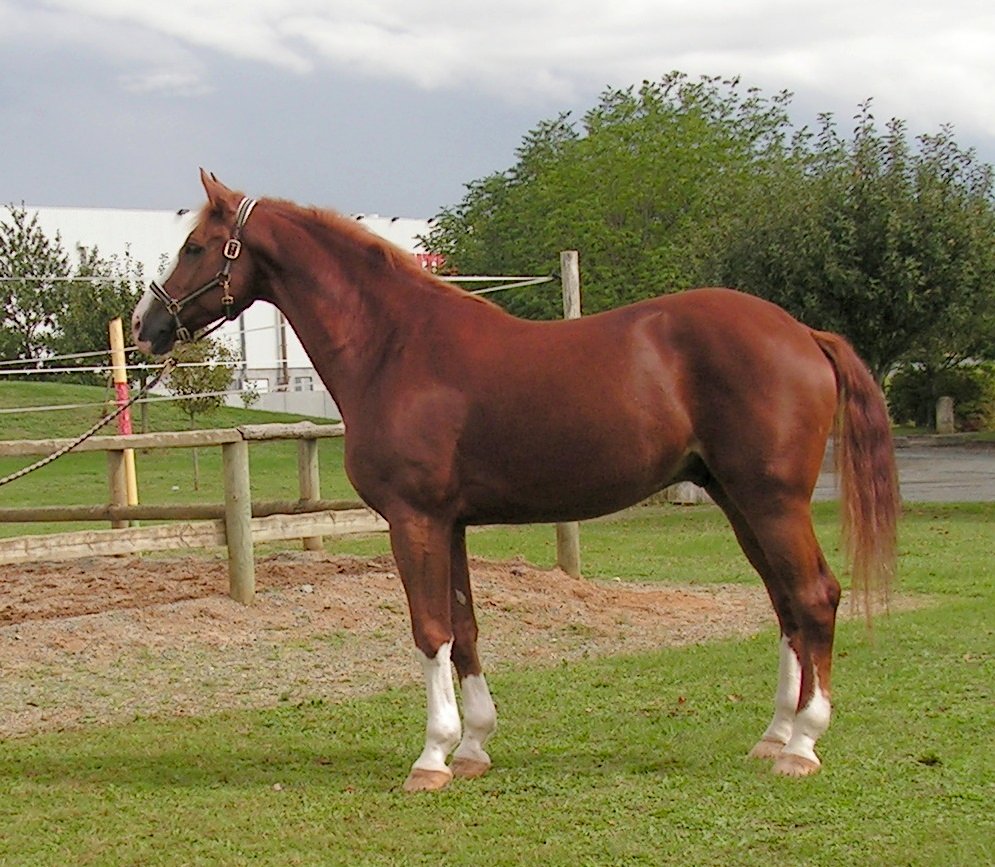
This appears to be a Wanderwort which originally designated some wild ungulate of the Eurasian steppes and which is also found in Baltic *kumel-iā̃, Slavic *kobɨ̄lā 'mare' and in Altaic (with metathesis): Turkic *Kulum 'foal', Mongolian *kulan 'ass', Tungusic *ku(l)ma- 'maral (Siberian stag)' (EDAL 911).
_______________________________________
1 Another species of camel, the Bactrian camel, native to the steppes of Central Asia, was first domesticated before 2,500 BCE.

25 June 2012

Celtic *dubro- 'water' and the flood myth

Celtic *dubro- 'water' is attested on Old Irish dobur and Middle Welsh dwfr, dwr, as well as in Gaulish anthroponymy and toponomy (Dubra, Uerno-dubrum)1. Incomprehensibly, the Celtic specialist Ranko Matasović conflates this word with an homonymous adjetive (Middle Irish dobur 'black, unclean') corresponding to *dubu- 'dark'. On the other hand, some Indo-Europeanists have suggested a link with the same IE root found in *dubno- 'deep', which referred to the Underworld in ancient mythology. However, none of these proposals looks convincing to me.

My colleague Ishinan suggested a link to Classical Arabic dibār/dabra-h 'water channel', which IMHO is related to Hurrian tem-ari 'irrigation ditch; channel', linked by Diakonoff-Starostin to NEC *ta:mɦi (˜ -ɨ, -u) 'vein; pipe, kennel'3, hence Turkic *dạmor 'vein, artery; root'.

Fortunately, Delamarre quotes the seemingly related Illyrian gloss dúbris 'sea'4. This makes me think it could be related to Hebrew ʕbr, Arabic ʕbr-[u]- 'to inundate, to invade', conflated by Militarev with the homonymous root *ʕVbur- found in Akkadian ebēru 'to cross (water); to extend beyond (something)' and which in turn would derive from Afrasian *ʕa-bir- 'to travel (along a road), to pass by, to cross (rivers)', cognate to IE *per- 'to ferry'. Another homonymous Semitic root reconstructed by Militarev is *ʕa/ibr- 'river bank', which I'd link to Germanic *ōfVr- 'bank, shore'.  

IMHO this would be part of the Paleo-IE 'water' complex root studied by the Spanish Indo-Europeanist Francisco Villar5, which includes *ab- (Celtic *abon-, Latin amnis 'river'), *up- (Lithuanian ùpē, Letonian upe 'river'), *a(:)p- (Sanskrit ā́paḥ 'water', Tocharian āp 'water, river'). 

This etymology would point to a post glacial environment where rapid rising sea levels caused great extensions of land to be flooded, as in the Black Sea Flood, first proposed by William Ryan and Walter Pitman in 19976. According to these authors, the former Black Sea was a freshwater lake feeded with glacial meltwater and whose level was 90 m below the Mediterranean. Around 5,600 BC, the rising sea level caused the Bosporus to broke, forming a giant cascade. This event caused the exode of the people living in the flooded areas (more than 150,000 km2 of land), contributing to the spreading of a flood myth in several cultures.
___________________
1 R. Matasović (2009): Etymological Dictionary of Proto-Celtic, p. 107.
2 Form which derives Etruscan θivhari(e), θepri-, θefri- 'river, channel' > Latin Tiber, TIberius.
3 I.M. Diakonoff & S.A. Starostin (1986): Hurro-Urartian as an Eastern Caucasian language, p. 25.
4 X. Delamarre (2008): Dictionnaire de la langue gauloise, p. 151-152.
F. Villar et al. (2011): Lenguas, genes y culturas en la prehistoria de Europa y Asia suroccidental.
6 W. Ryan & W. Pitman (1998): Noah's Flood.