Showing posts with label French. Show all posts

24 July 2014

French bourbe 'sludge' (updated)


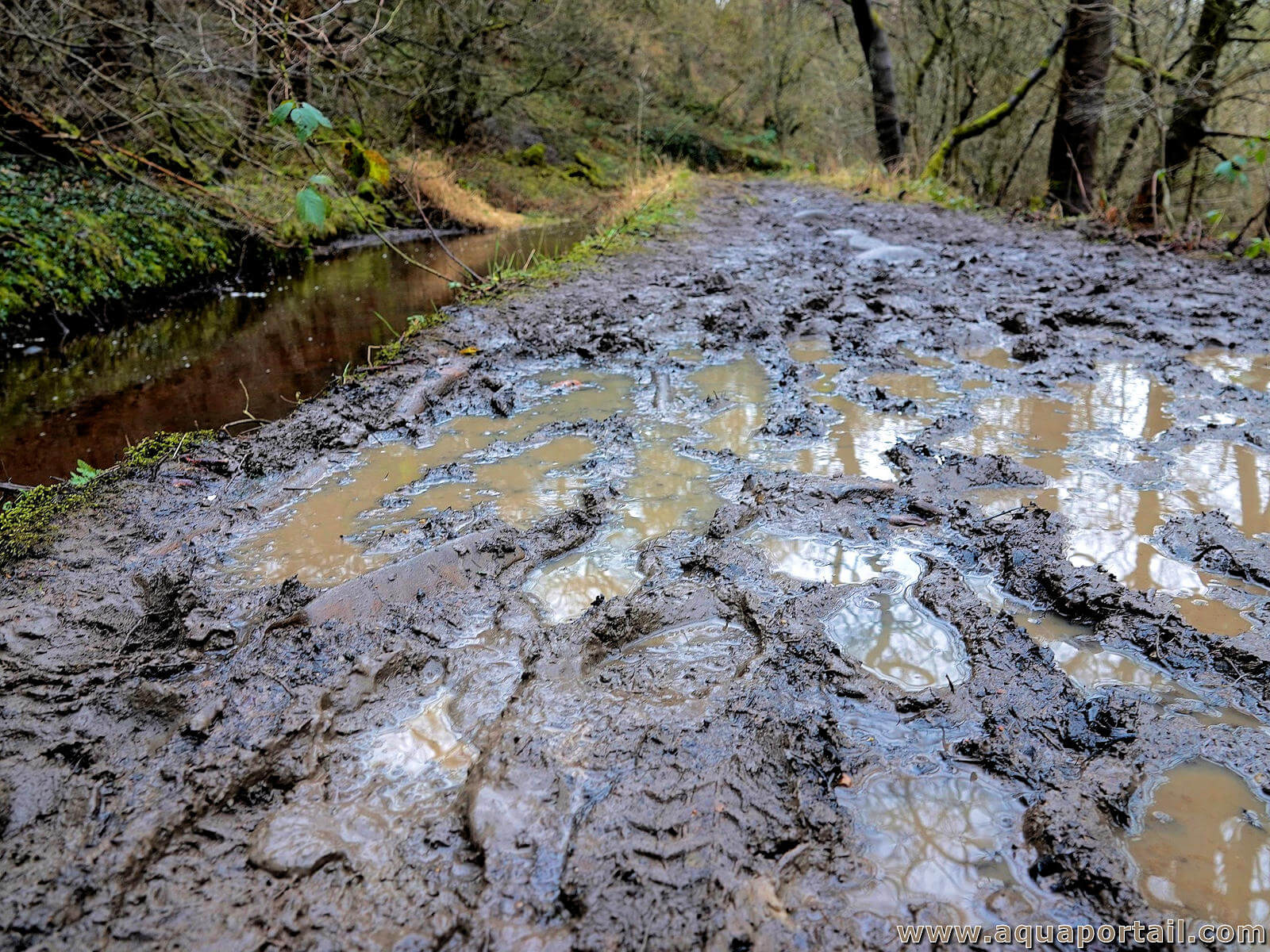
French bourbe 'sludge' (collective form bourbier) designates a kind of dark, thick mud deposited by stagnant or waste waters and surely derives from 
Gaulish *borwā (f.), whose supposed meaning 'hot, boiling spring' accroding to standard dictionaries, which link it to Welsh berwi, Breton bervi 'to boil'1. 

However, in my opinion this etymology is semantically unsatisfactory, and I'd prefer a substrate loanword from Baltic *purwā > Lithuanian pũrva 'smudge, dregs', Latvian pùrvs, purve 'morass, swamp', a word with parallels in Indo-Aryan: Sanskrit púrīṣa- 'crumbling or loose earth, rubbish; feces, excrement, ordure', Sinhalese puraṇa 'fallow or waste land'. 
______________________________
1 X. Delamarre (2008): Dictionnaire de la langue gauloise, pp. 82-83.

03 May 2010

Some wrong Spanish etymologies

Some Coromines' Spanish etymologies (the ones found in the DRAE are generally nastier) enjoy a greater credit than they actually deserve.

For example, if we look at cerrar 'to close, shut' in his Breve diccionario etimológico de la lengua castellana, we can see he derives it from late Latin *serare < Latin sera 'bolt, lock', in spite that Spanish /c/ (in the Middle Ages a dental affricate [ts] and now an interdental fricative [θ]) can't come from Latin /s/. He denies elsewhere any relationship between this word and Catalan serrar, French serrer 'to tighten', although they fit both phonetically (as [ts] > [s] in these languages) and semantically (the meanings 'closed' and 'tight, dense' are related). The answer is all these words1 are Pyrenaic (a Vasco-Caucasian substrate language) loanwords from the PNC root *=utɕE(rV) 'thick, fat'.

Another weird etymology is jara 'rockrose (Cistus)', a kind of bush common in the Iberian Peninsula which Coromines derives from Arabic šacra 'low bush', where [ʃ] /x/ regularly developed into [χ] /j/. Apparently, he ignores Basque zare 'basket' and (t)xara 'rockrose (wood)', a word of Pyrenaic origin for which Bengtson suggests an etymology from PNC *tʃ’ʃ’wɦeli (˜ tɕ’ɕ’,-ʕ-,-ɫ-) 'a k. of foliage tree'2. The palatized form would have been borrowed into Spanish xara, then jara.
_________
1 There's also Basque (Biscayan) zarri 'dense', zarra-tu 'dense; to close, shut'.
2 Related to Paleo-Eurasian *tʃwalV 'willow', a root represented in Paleo-European *sal(i)k- 'willow' (Celtic *salik-, Latin salix, Germanic *salx-) and native IE *welik- 'willow' (Greek helíkē, English willow).

01 November 2009

Spears and poles

Basque langa 'enclosure, rustical door; bar, catch (on a door or window)'1 is related to Occitan/Catalan tanca id.2, with a sound shift *t- > l- in Proto-Basque.

This is an Italoid substrate loanword whose etymology is IE *tengh-s- 'pole' > Latin tēmō 'steering-wheel; spear (of a cart)' and Old English þīsl 'wagon-pole, shaft'3. This IE root is a -n- infixed variant of *(s)teg- 'pole, post' (English stake), which in turn is related to PNC *dwɨq’(w)V: 'log, stump'.

This Vasco-Caucasian root is found as a Vasconic loanword in Spanish taco, Catalan tac 'block of wood, wedge; wooden stick', French taquet (diminutive form) 'block of wood, wedge', as well as in Basque haga 'pole, stake'4. The Tyrrhenian variant is found in Spanish tocón (augmentative form), Portuguese tôco 'stump' and also in Catalan soca, French souche 'stump', Old French choque 'log' and Spanish zoquete (diminutive form) 'block of wood; dumb, stupid'5, with assibilation of the initial dental.
___________
1 Mitxelena derives it from Romance *planka 'plank, board'.
2 Coromines proposes a derivation from a hypothetical Sorotaptic verb *tankō- 'to close'.

3 See Mallory & Adams (2006), p. 249.
4 There's also non-standard Basque tako 'circular piece of wood' and taket 'stake, wedge; dump, stupid'.

5 Coromines considered this word to be an arabism. What a zoquete!