Showing posts with label Temematic. Show all posts

13 March 2022

Etruscan φersu 'masked character (in games)' (updated)


Latin persōna 'theatre mask' is a loanword from Etruscan *φersu-na > φersu 'masked character (in games)'. This can be analized as a derivative from an unattested form *φers 'husk', an agricultural term with correspondences in Hittite paršdu 'leaf, foliage'1, linked in turn by Alexei Kassian to Kartvelian *purtś 'husk, foliage' (Georgian purcel ’leaf, foliage', Megrel purča 'chaff, husk', Laz purča 'sweet corn ear', purčumale 'a k. of weed'), *prtś-wn- 'to husk, to scale'2.


Presumably related to this etymology is the Greek theonym Perséphonē (Etruscan Φersipnei, Latin Proserpina), attested on several Attic vases from the 5th century BC as Persóphatta, P(h)erséphatta, Pherréphatta. Rudolf Wachter analyzes it as a compound whose second member would be derived from Indo-European *-gʷhn-t-jā < *gʷhen- 'to beat, to kill', and the first one related to Sanskrit parṣá- 'sheaf, bundle', Young Avestan parša- 'ear (of corn)', to which Michael Weiss -in a personal communication to Wachter- also adds Latin porrum and Greek práson 'leek', from a supposed Indo-European lexeme *pr̥s-o-'3. Thus the reconstructed meaning of the theonym would be 'sheaf-beater', i.e. 'threshing maiden'4. 


However, like most Indo-Iranian lexicon related to agriculture, *parš appears to be a substrate loanword from the language spoken by BMAC people5. On the other hand, for Slavic *proso- 'millet', Georg Holzer posited a loanword from a substrate language he called Temematic (Temematisch in German) after its proposed sound correspondences with PIE and where *r̥ ro6. Although Holzer's theory has been discredited as a whole7 it could still explain the etymology of the Slavic word from I*bhar(e)s 'a k. of cereal (milletbarleyspelt)' (Latin far, farris), a remnant of the languages spoken by the Neolithic farmers who colonized Europe from the Near East.

________________________________________________________
Wrongly translated by some authors as 'sprout, sprig'. See A. Kloekhorst (2008): Etymological Dictionary of Hittite, pp. 645-646. 
A. Kassian (2009): Anatolian lexical isolates and their external Nostratic cognates, in Orientalia et Classica, §48.
M. De Vaan (2008): Etymological Dictionary of Latin and the Other Italic Languages, pp. 481-482.
R. Wachter (2006): Persephone, the Threshing Maiden, in Die Sprache, vol. 47, no. 2 (2007-2008), pp.163-181.
5 M. Witzel (2003): Linguistic Evidence for Cultural Exchange in Prehistoric Western Central Asia, in Sino-Platonic Papers 129, p. 33.
G. Holzer (1989): Entlehnungen aus einer bisher unbekannten indogermanischen Sprach in Urslavischen und Urbaltischen, §2. See also F. Kortland (2003): An Indo-European substratum in Slavic?, in Languages in Prehistoric Europe, pp. 183-184.
R. Matasović (2013): Substratum words in Balto-Slavic, in Filologija 60, pp. 75-102.

09 February 2014

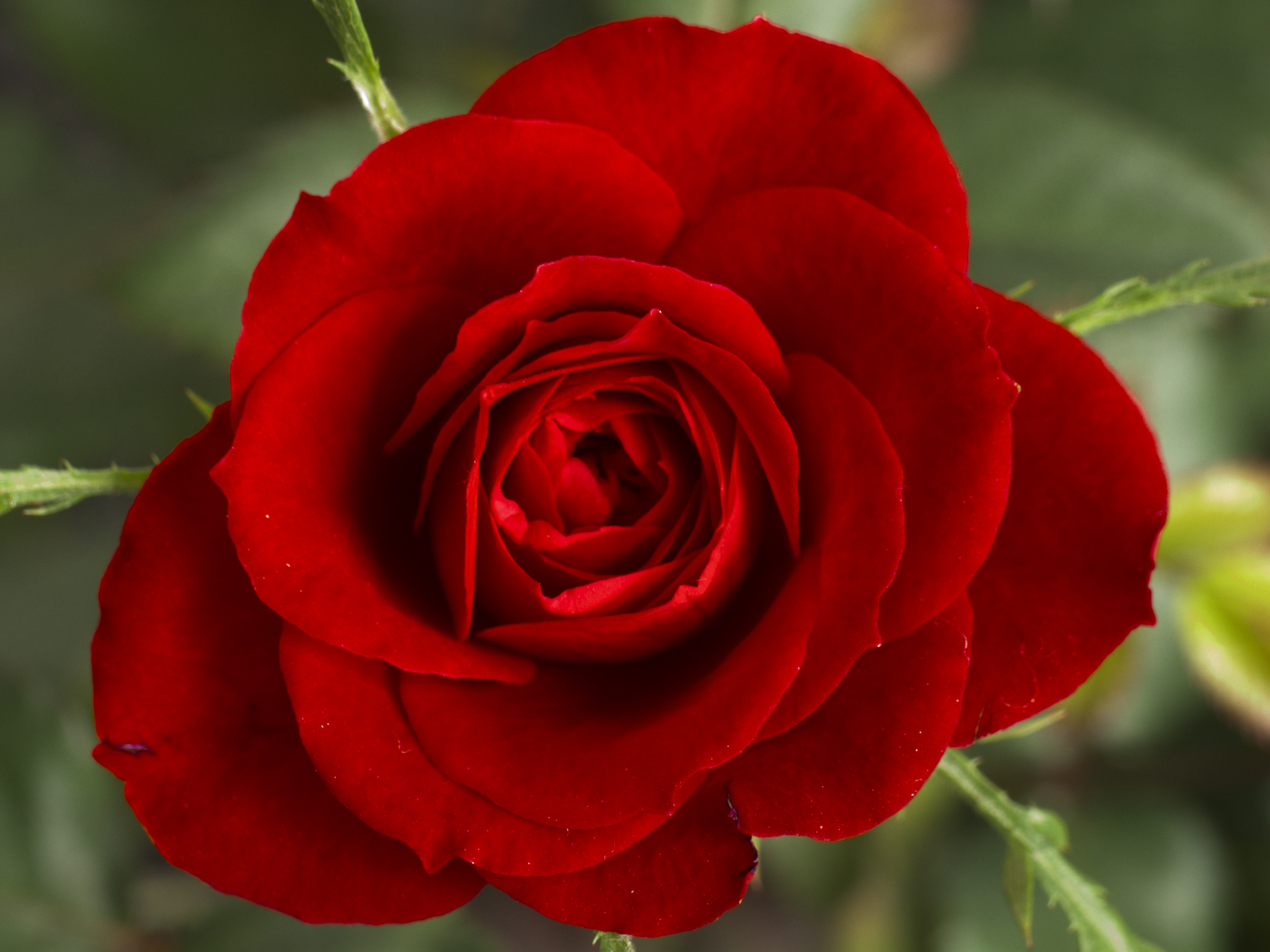
The rose


Avestan varəda, New Persian gul 'rose' < Iranian *wr̥da- is a Wanderwort which spread to Armenian vard, Aramaic wardāˀ, Arabic ward1. Beekes considers Greek rhódon (Aeolic bródon) 'rose' < *wródon to be "certainly borrowed from the East", but he forgets to explain the Greek vocalism (ro instead of the expected ar/ra).

In my opinion, the Greek word would be a substrate borrowing from a reflex of *wr̥d-o- in a language where  > ro as in like Holzer's "Temematic"2. This protoform is the source of Germanic *wurθ-/*wurd- 'sweet briar (Rosa rubiginosa)' and Italic *ruθo- 'bramble (Rubus fruticosus)' > Latin rubus.
 
On the other hand, dialectal Italian (Tuscan) rasa, ràzina, razzola 'bramble' would be derived from Etruscan *raθia (glossed as radia by classical authors) < *rad-ja3. Also according to my amateur colleague Douglas Kilday, Latin rosa 'rose'4 would be a loanword from Etruscan *ruθia through the intermediation of Sabine *rodja.

Also Kartvelian *bardzg- 'thorns, thorny plant', *burdzg(a)- 'bristle' would descend from an earlier protoform *bardj-/*burdj- 'thorn', where the cluster *dzg would derive from a patalized dental stop *dj, according to the correspondences proposed by Bomhard5.
________________________________
1 R.S.P. Beekes (2010): Etymological Dictionary of Greek, p. 1289-1290.
2 G. Holzer (1989): Entlehnungen aus einer bisher unbekannten indogermanischen Sprach in Urslavischen und Urbalistischen. See also F. Kortland (2010): An Indo-European substratum in Slavic?, in Studies in Germanic, Indo-European and Indo-Uralic, p. 73-81.
3 This etymology would also explain Latin radius '(pointed) stick; light beam; wheel spoke' as a loanword from Etruscan.
4 Which Beekes considers to be "probably borrowed from Greek, but the details are unclear". Good gracious!
5
 A. Bomhard (2008): Reconstructing Proto-Nostratic, vol. 2, p. 237-243.