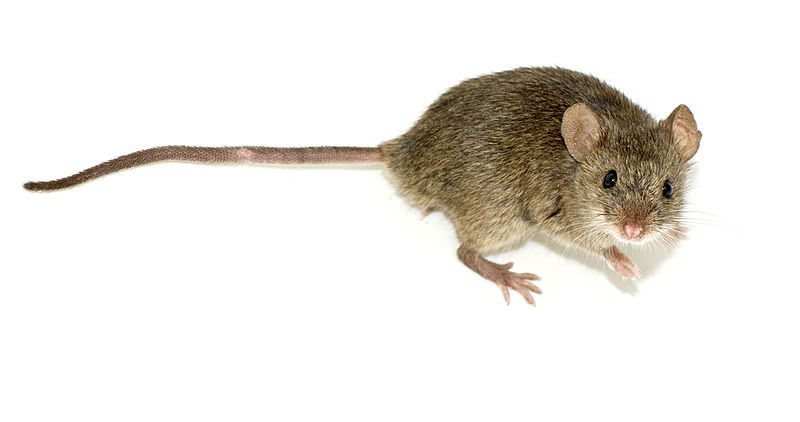
Basque sagu, sat- 'mouse'
is a word found in compounds such as satandera (B, G), satandre
(S, R) 'weasel' (and(e)re
'lady'), satitsu (G, HN) 'shrew'
(itsu 'blind'), sat(h)or 'mole' (second member unknown) and saguzar
(B, G) 'bat' (zahar
'old'), and which has cognates in Afrasian: Akkadian šikkû 'mongoose', Amharic ǝkokko
(aškokko, ǝškokko) 'rock hyrax', Ge'ez sˁǝkˁwǝnkˁwǝn,
sˁǝkˁwǝskˁwǝn 'field mouse; a kind of
lizard'1, Central Chadic *Sakw-
'squirrel; dog'2, Omotic *sakw/*sikw
'chameleon; bat', Kartvelian *tsiqˀw- 'squirrel, mouse'
(Georgian ciqˀwi 'squirrel'), Dravidian *tśikk- 'mouse', Old Turkish čekün 'young of marmot', Tungus čekše 'tarbagan (Marmota sibirica)'. Also related are Etruscan seχ3, Thracian súkhis and IE *dhug-h₂ter 'daughter'.
Although Bengtson
links the Basque word to Caucasian *tsa:rggwɨ:(~ -ǝ:,-a:) 'weasel, marten' (see here),
from which Starostin thinks the Kartvelian word was borrowed, in my opinion
this is a genuine Eurasiatic root which in some languages (Kartvelian4,
Dravidian, Altaic5) conflated with a phonetically similar word
'small'6, probably for tabooistic reasons.
______________________________________________
1 Quoted by Dolgoposky (ND 310a). See
also W. Leslau (2010): Concise Dictionary of Ge'ez, p. 226.
2 Where S is an
unspecified sibilant.
3 Also spelled as sec, śec, śeχ.
3 Also spelled as sec, śec, śeχ.
4 Kartvelian *tśˀukˀ-
(Georgian cˀukˀ-an-a 'very small', Megrel čˀukˀ-
'mouse').
5 Altaic *tʃhjà:khe(~ -u) 'small'.
6 For which Dolgopolsky (ND 334)
reconstructs a separated root, which he considers to be phonosymbolic.
