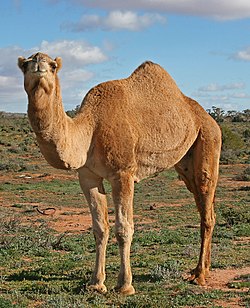
Semitic *gam(a)l-
'camel' is a widespread word which designates the dromedary of SW Asia and North Africa, first domesticated in Arabia before 2,000 BCE1, and was borrowed into Greek kámēlos and in turn into Latin camēlus.

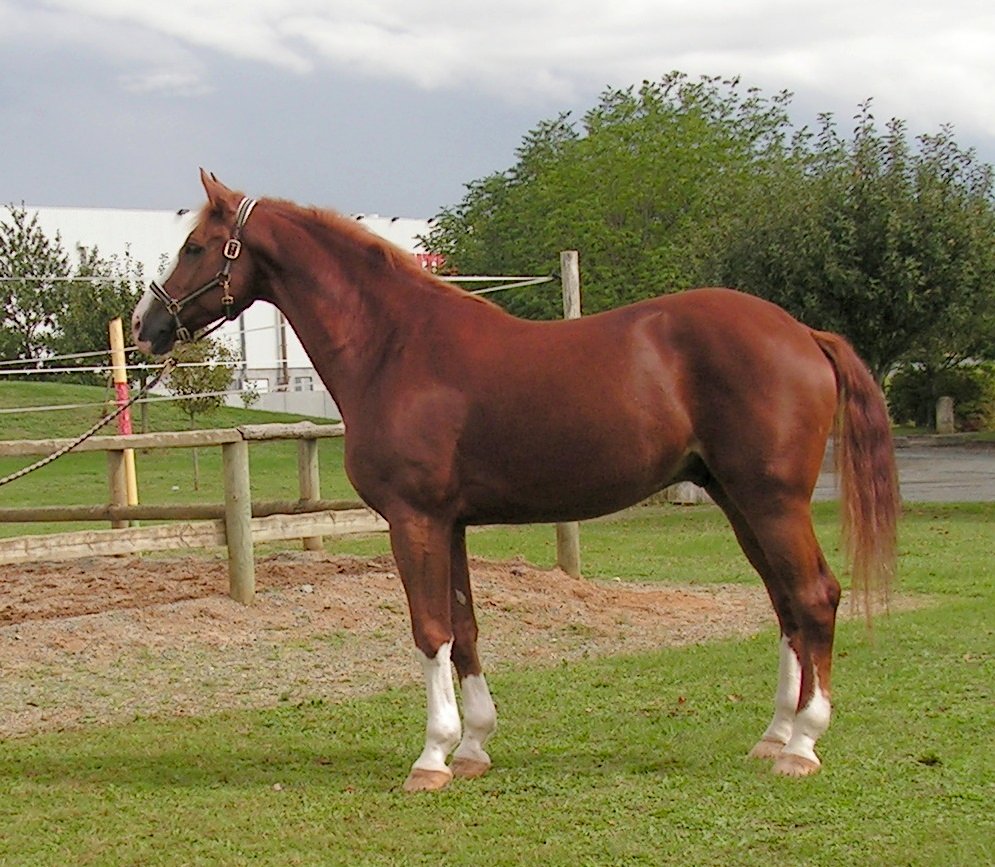
This appears to be a Wanderwort which originally designated some wild ungulate of the Eurasian steppes and which is also found in Baltic *kumel-iā̃, Slavic *kobɨ̄lā 'mare' and in Altaic (with metathesis) *kúlme 'a k. of ungulate': Turkic *Kulum 'foal', Mongolian *kulan 'Mongolian wild ass (Equus hemionus hemionus)'2, Tungusic *ku(l)ma- 'maral (Siberian stag)/wapiti (Cervus canadensis)' and Japonic *kuáma 'foal, colt' aral' (EDAL 911).

__________________________________
1 Another species of camel,
the Bactrian camel,
native to the steppes of Central Asia, was first domesticated before 2,500 BCE.
2 Borrowed by Turkic, where it designates the Turkmenian kulan (Equus hemionus kulan).
3 Tocharian B kercapo 'ass, donkey' is likely an early Indo-Arian loanword. See D.A. Adams (1999): A Dictionary of Tocharian B, p. 195-196.
4 Although some authors have proposed a link to thieldones 'a breed of Asturian ambling horses' (Pliny) < IE *del- 'to shake' (cfr. English tilt), in my opinion this is semantically unsatisfactory.


