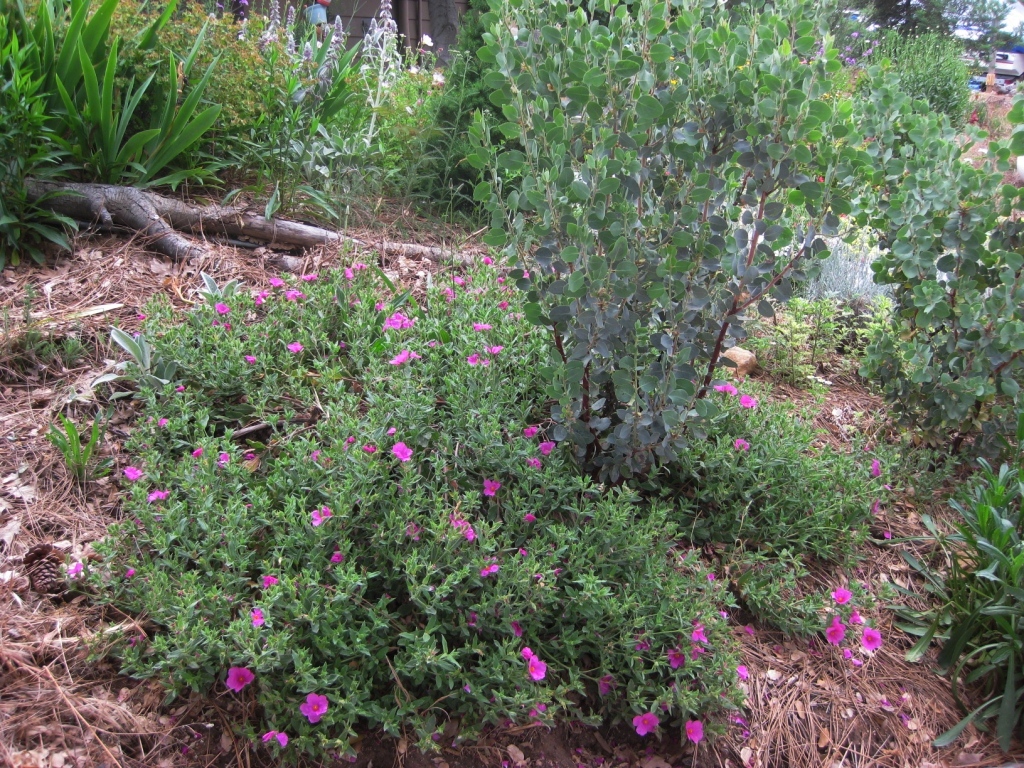
Spanish jara (old xara) 'rock rose (Cistus); low bushes' designates several species of perennial shrubs common in the Mediterranean area, especially Cistus ladanifer, which in other Hispano-Romance languages and Moroccan Arabic are designated with derivatives of Hispanic Latin stip(p)a.
The Spanish word has correspondences in Portuguese (en)xara 'low bushes' and Galician xara, Basque xara, txara, zara 'rock rose', and it's a borrowing from Hispano-Arabic ʃáʕra (Classical ʃaʕrāʔ) 'thicket, wood'1. The Arabic word is in turn related to ʃaʕār- 'thick and interlaced trees which give shadow in summer and shelter in winter; vegetation', ʃaʕīr 'barley' < Semitic *ɬaʕVr- 'barley; grass, straw' (ND 2219), contaminated with ʃaʕr- 'hair' < Semitic *ɬaʕr- 'hair' (ND 2220).
The Spanish word has correspondences in Portuguese (en)xara 'low bushes' and Galician xara, Basque xara, txara, zara 'rock rose', and it's a borrowing from Hispano-Arabic ʃáʕra (Classical ʃaʕrāʔ) 'thicket, wood'1. The Arabic word is in turn related to ʃaʕār- 'thick and interlaced trees which give shadow in summer and shelter in winter; vegetation', ʃaʕīr 'barley' < Semitic *ɬaʕVr- 'barley; grass, straw' (ND 2219), contaminated with ʃaʕr- 'hair' < Semitic *ɬaʕr- 'hair' (ND 2220).
__________________________________
1 F. Corriente (2003): Diccionario de arabismos y voces afines en iberorromance, p. 307-308.


