Showing posts with label Romance. Show all posts

10 October 2016

Latin costa 'rib; side, flank' (updated)


Latin costa 'rib; side, flank' has been traditionally linked by Indo-Europeanists to Old Church Slavonic kostĭ 'bone'1, although more recently De Vaan considers this etymology to be dubious, among other reasons because of semantic mismatch2. 

In fact, the Slavic word is undoubtedly related to IE *h2osth1- 'bone', although its initial velar stop can't be accounted for in the mainstream model3. The amateur linguist Glen Gordon proposes an early borrowing from a femenine variant of Semitic *kˀa(w)ʃ- 'bow'4 (cfr. Phoenician qšt5), with a semantic drift 'bow' > 'rib' > 'bone'.

In most Romance languages except Romanian, the anatomical meaning of costa was transferred to diminutive forms (e.g. Spanish costilla, French côtelette), while the main word specialized into geographical meanings: '(hill) slope' (e.g. Spanish cuesta) and 'shore' (Catalan and Italian costa), which spread as a Wanderwort: Spanish costa, English coast, Dutch and Swedish kust, German Küste, Danish kyst, etc. There are in addition Middle High German Gestade 'bank' and Old Irish ces 'flank, rump steak', césán 'flanks', which can't be readly derived from costa although they're semantically and phonetically close. 

This makes me wonder if all these words could be Semitic borrowings akin to or from Phoenician qsˁt 'edge, limit' (f.)6 < Semitic *kˀītʃˀ 'end, to finish' < Afrasian *kˀajatʃˀ- (HSED 1562), with Latin and German having got the femenine variant and Goidelic the masculine one.
____________________________________________ 
1 A. Ernout & A. Meillet (1959): Dictionnaire étymologique de la langue latine, p. 146.
2 M. De Vaan (2008): Etymological Dictionary of Latin and the other Italic Languages, p.140. 
3 Gamkrelidze-Ivanov regard these as different reflexes of a former *qʰ. See Gamkrelidze & V.V. Ivanov (1995): Indo-European and the Indo-Europeans, pp. 111-113.
5 Mª J. Estanyol (2008): Diccionari abreujat fenici-català, p 113.
6 Mª J. Estanyol, op. cit., p 112.

07 November 2015

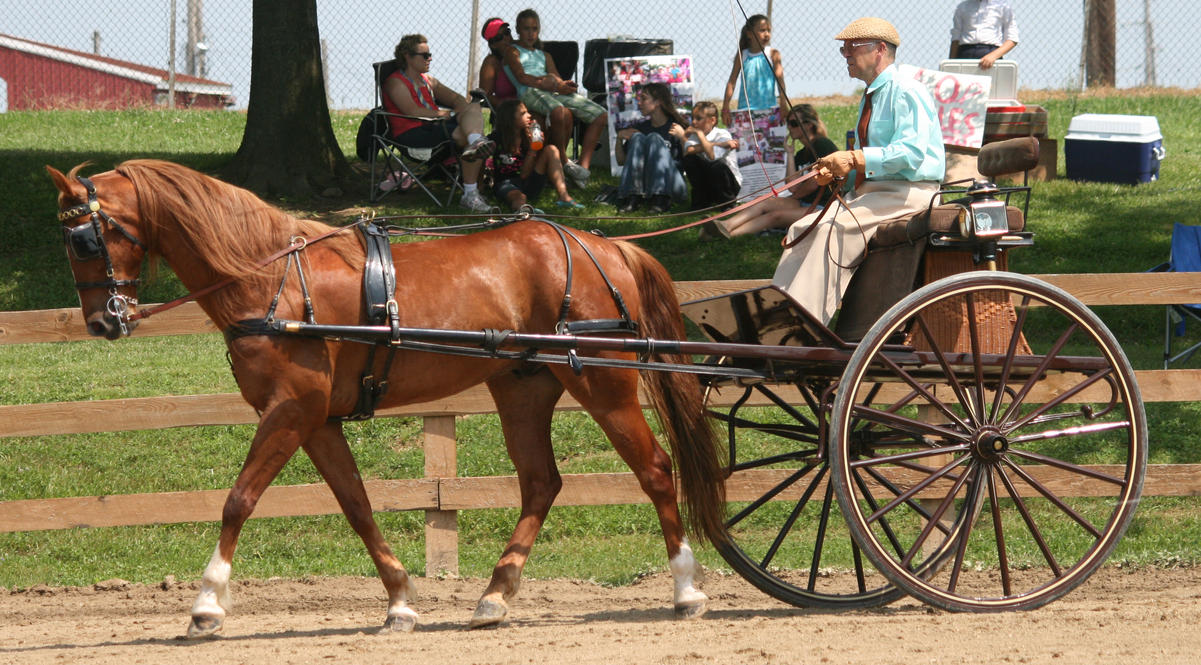
The horse goes before the cart (updated)


Germanic *xursa/xrussa- 'horse' has been linked by some Indo-Europeanists to Latin currō 'to run'1. This verb is derived from a Paleo-European lexeme *kərəs- also reflected in Celtic *karro- and Latin currus 'cart'2 < *kərəs-o-. However, in chronological terms, the traditional view of deriving 'horse' from a verb 'to run' would be like putting the cart before the horse. That is, the meaning 'horse' has to be older than 'run' and not the other way around.  


In my opinion, the Paleo-European word would be related to East Caucasian *ʁHwo:r[tʃʔ]o (˜ -tɕʔ-,-ə) 'deer, game', probably dating from the Upper Paleolithic and the source  of Kurganic IE *jorko-3 (Celtic *jorko- 'roe deer (Capreolus capreolus)', Greek zórks, dórkas 'gazelle'), with metathesis. 

Possibly also Yeniseian *kuʔs 'horse' belongs here, as the names of domesticated animals are often Wanderwörter.


I also suspect this is the origin of the autochthnous name of the Pyrenean chamois (Rupicapra pyrenaica)4: Aragonese chizard(o), ixarzo, Gascon isar(t), idart, Catalan isard < *i-tsardV, with regular merger of sibilants /ts/ and /s/ in Gascon and Catalan and a prefix *i-, probably a fossilized article. There's also the unprefixed western variant *tsarri > Gascon sarri, Aragonés sarrio, the latter borrowed into Basque5.
_______________________________________________________________________________
1 G. Kroonen (2013): Etymological Dictionary of Proto-Germanic, pp. 260-261.
2 Latin carrus is a Celtic (Gaulish) loanword.
3 Caucasian ʁ ~ Kurganic IE k and Caucasian tʃ ~ Kurganic IE j.
4 A species of mountain goat which lives in the Pyrenees, Cantabrian Mountains and the Apeninnes, considered to be a subspecies of the chamois (Rupicapra rupicapra) by some specialists.
5 The lack of a native Basque word for the animal can be explained from its absence from the Basque-speaking area.

19 September 2015

Galician-Portuguese silva 'bramble' (updated)

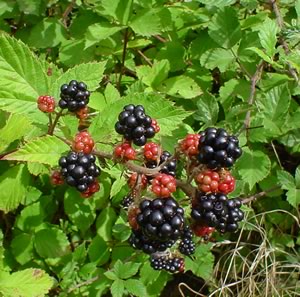
Blackberries

Contrarily to what some linguists think, Galician-Portuguese silva, silveira (collective) 'bramble (Rubus)' is unrelated to the homonymous Latin silva 'forest' (which regularly gives Romance selva), but it's cognate to Leonese silba 'service berry', silbar, silbal (collective) 'service tree (Sorbus domestica)'2.

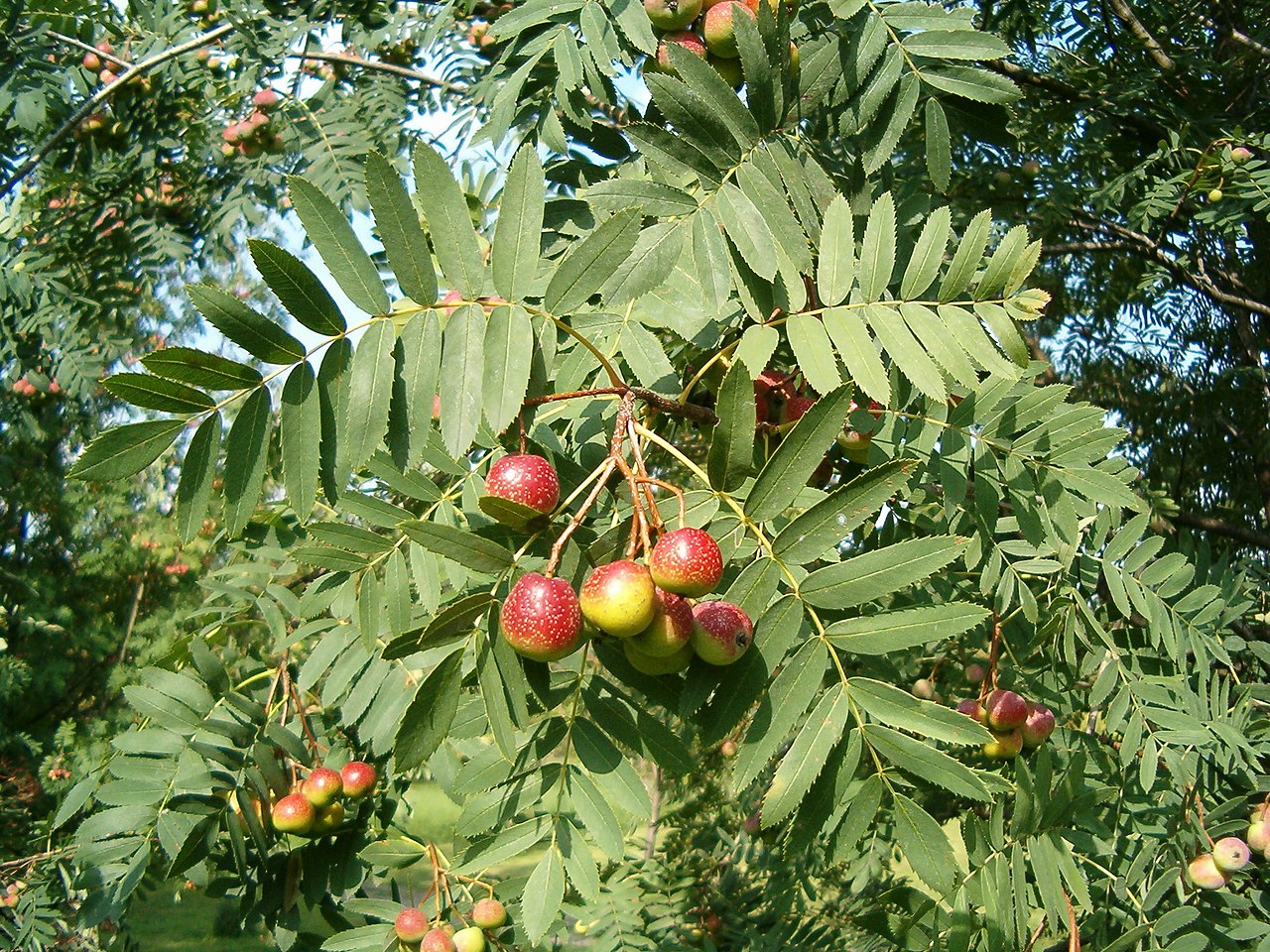
Service berries

This is a substrate loanword *silba1 with parallels (through lambdacism) in Romance serba 'service berry'3 (Catalan serva, Occitan sèrba, Spanish serba, jerba, sierba id., serbal, sierbal, Catalan servera, server (collective) 'service tree'4), Lithuanian serbentà 'currant (Ribes)' and dialectal Russian serbalína, serberína 'rose hip', sor(o)balína 'bramble'5, Latin sorbus 'service tree' (Spanish sorbo), sorbum 'service berry', from which derive Leonese (Liébana) suerba, French sorbe id., sorbier, Galician sorbeira, solveira (collective), Leonese  (Liébana) suerbal  'service tree'.

Although these forms show the typical IE ablaut e ~ o6, we also can find variants with /u/ vocalism: Leonese (Liébana) surba 'service berry', surbu (collective) 'service tree' and regional Spanish (Álava, Bureba, High Rioja) zurba, zurbia 'service berry', zurbal, zurbial, surbial (collective) 'service tree'. 

________________________________________________________ 
1 The shift -lb- > -lv- is regular in Portuguese.
2 J. Oria de Rueda et al. (2006): Botánica forestal del género Sorbus en España, in Investigación Agraria. Sistema y recursos forestales, vol. 15, nº 1,  p. 166-186.  
3 The proposed connection (Pedersen) with Celtic *swerwo- 'bitter' (Old Irish serb, Middle Welsh chwerw) can be ruled out. 
4 The forms serbo, jerbo, selbo, jelbo are the product of a contamination with sorbo.
5 M. Vasmer (1955): Russisches Etymologisches Wörterbuch, p. 697.
6 In fact, some Indo-Europeanists reconstruct a protoform *serbh- ~ *sorbh-.

30 July 2015

Basque (k)abia 'nest'


The Basque word for 'nest' appears with variants such as abia (B), habia (Z), kabia (G), kafia (G, HN), abira (S), abi (B), kabi (G, HN), api (G, HN), aapi (G). For this word, Mitxelena -the founder of modern Vascology- proposed more than 50 years ago an etymology from Latin cavea 'cage', which turns to be semantically inadequate.
 
By contrast, I propose a loanword from Celtic *āwjā 'brood; nest', a femenine form corresponding to the masculine *āwjo- 'egg' (Old Welsh ui, Middle Welsh wy, Middle Breton and Old Cornish uy)1. Therefore, both k- and -r- in some of the Basque forms would be epentic.


On the other hand, the forms abe (B) 'honeycomb', kabe (*L) 'nest; beehive' are the result of a semantic contamination with derivatives of Romance *kofanu 'deep basket' (Latin cophinus) such as Biscayan abao, abau 'honeycomb' and Bearnese càben 'beehive'. The semantic drift can be explained because artificial beehives in the shape of a deep basket are used in some places.
_____________________________________________________________________
1 R. Matasović (2008): Etymological Dictionary of Proto-Celtic, p. 50.

05 August 2014

Gaulish *santikā 'ladle; milking vessel' (updated)


Gascon sanja, sansha, santja, sòntja, shansha, sancha, Aragonese sancha and dialectal Catalan sanxa (Cerdanya) designate a milking vessel carved in wood, often made by hollowing out a tree trunk1. On the other hand, dialectal Basque xantxa (L, Z), xaiñtxa (Z) designates a milking vessel with a long metal handle (kopetxa), and in the latter also 'ladle' (golhare), a meaning which in my opinion would be the original one2.

Although the Gaulish origin of this word seems undeniable, a Celtic etymology is more dubious. For example, Matasović proposes a Celtic femenine *sϕanjā corresponding to the masculine *sϕenjo- > Old Irish sine 'teat'3, in turn derived from IE *spen-, which is phonetically unacceptable, among other things because Celtic *sϕ- gives s- in Goidelic but f- in Britonic and probably also in Gaulish. For the same reason, Hubschmid's protoform *sand-ikā from IE *spn̥dh- 'bucket'4 can't be accepted, although Celtic *sϕondā would be the origin of Romansh s(u)onna 'bucket', probably a Lepontic loanword.


Following Coromines5, I'd propose a Gaulish protoform *santi-kā as a Baltoid loanword corresponding to Baltic *samti-/semti- > Lithuanian sámtis 'spoon, ladle', sémti 'to pump, to scoop (a liquid)', from an IE root *semH- 'to pump, to scoop (a liquid)' also found in Latin sentīna 'bilge; sewer, drainage' and cognate to Altaic *ʃŏ́mo 'to dive; to summerge; to scoop (a liquid)' (EDAL 2193) > Turkic *tʃo:(m)- 'to diver; to swim; to scoop (a liquid); to immerse, to dip' (Turkish čömče 'spoon'6). On the other hand, Etruscan śanti (Tabula Capuana) probably designated some kind of vessel.
___________________________________________
1 G. Rohlfs (1970): Le Gascon. Etudes de phylologie pyrénéenne, § 59. It's likely the same kind of vessel called kaiku in Basque.
2 The oldest European metal ladlers are from the Hallstatt culture of the Early Iron Age.
3 R. Matasović (2009): Etymological Dictionary of Proto-Celtic, p. 333.
4 J. Hubschmid (1951): Alpenwörter. Ursprungs und vorromanischen Romanischen, p. 61.
5 DECLC, p. 667-668.
6 J. Hubschmid (1955): Schläuche und Fasser, p. 107, quotes čamča, čumča with a diminutive suffix -ča.

19 September 2013

Spanish jara 'rock rose; low bushes' (updated)


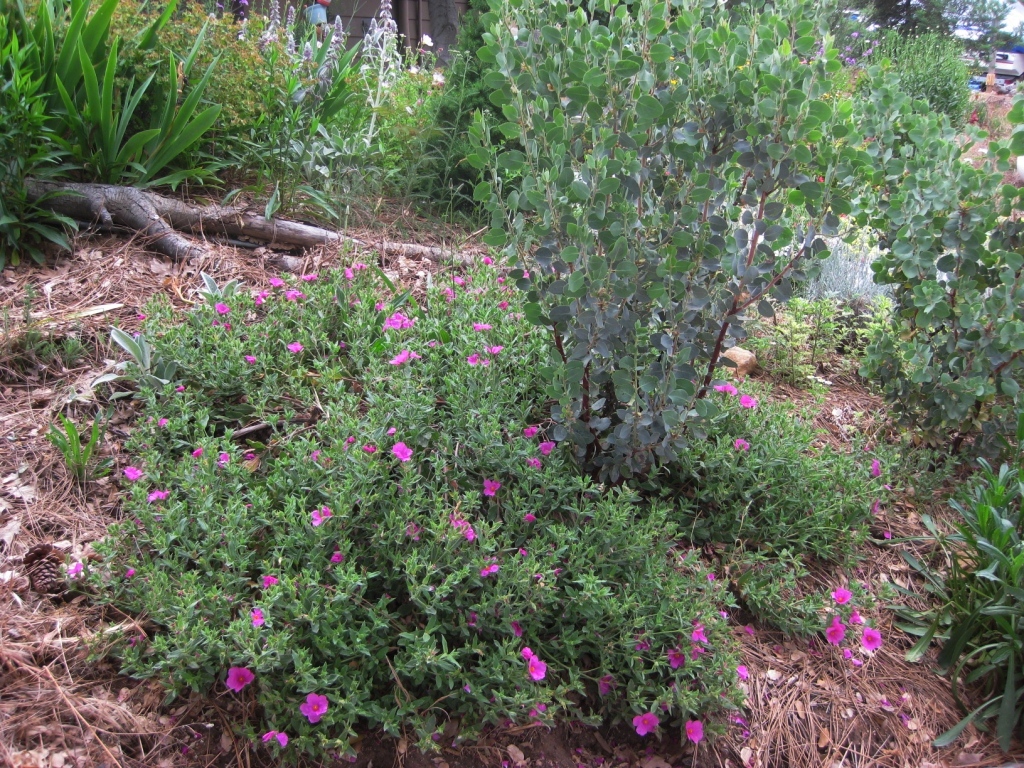
Spanish jara (old xara) 'rock rose (Cistus); low bushes' designates several species of perennial shrubs common in the Mediterranean area, especially Cistus ladanifer, which in other Hispano-Romance languages and Moroccan Arabic are designated with derivatives of Hispanic Latin stip(p)a.

The Spanish word has correspondences in Portuguese (en)xara 'low bushes' and Galician xara, Basque xara, txara, zara 'rock rose', and it's a borrowing from Hispano-Arabic ʃáʕra (Classical ʃaʕrāʔ) 'thicket, wood'1. The Arabic word is in turn related to ʃaʕār- 'thick and interlaced trees which give shadow in summer and shelter in winter; vegetation', ʃaʕīr 'barley' < Semitic *ɬaʕVr- 'barley; grass, straw' (ND 2219), contaminated with ʃaʕr- 'hair' < Semitic *ɬaʕr- 'hair' (ND 2220).
__________________________________
1 F. Corriente (2003): Diccionario de arabismos y voces afines en iberorromance, p. 307-308.