Showing posts with label Kartvelian. Show all posts

13 March 2022

Etruscan φersu 'masked character (in games)' (updated)


Latin persōna 'theatre mask' is a loanword from Etruscan *φersu-na > φersu 'masked character (in games)'. This can be analized as a derivative from an unattested form *φers 'husk', an agricultural term with correspondences in Hittite paršdu 'leaf, foliage'1, linked in turn by Alexei Kassian to Kartvelian *purtś 'husk, foliage' (Georgian purcel ’leaf, foliage', Megrel purča 'chaff, husk', Laz purča 'sweet corn ear', purčumale 'a k. of weed'), *prtś-wn- 'to husk, to scale'2.


Presumably related to this etymology is the Greek theonym Perséphonē (Etruscan Φersipnei, Latin Proserpina), attested on several Attic vases from the 5th century BC as Persóphatta, P(h)erséphatta, Pherréphatta. Rudolf Wachter analyzes it as a compound whose second member would be derived from Indo-European *-gʷhn-t-jā < *gʷhen- 'to beat, to kill', and the first one related to Sanskrit parṣá- 'sheaf, bundle', Young Avestan parša- 'ear (of corn)', to which Michael Weiss -in a personal communication to Wachter- also adds Latin porrum and Greek práson 'leek', from a supposed Indo-European lexeme *pr̥s-o-'3. Thus the reconstructed meaning of the theonym would be 'sheaf-beater', i.e. 'threshing maiden'4. 


However, like most Indo-Iranian lexicon related to agriculture, *parš appears to be a substrate loanword from the language spoken by BMAC people5. On the other hand, for Slavic *proso- 'millet', Georg Holzer posited a loanword from a substrate language he called Temematic (Temematisch in German) after its proposed sound correspondences with PIE and where *r̥ > ro6. Although Holzer's theory has been discredited as a whole7 it could still explain the etymology of the Slavic word from IE *bhar(e)s 'a k. of cereal (millet, barley, spelt)' (Latin far, farris), a remnant of the languages spoken by the Neolithic farmers who colonized Europe from the Near East.

________________________________________________________
1 Wrongly translated by some authors as 'sprout, sprig'. See A. Kloekhorst (2008): Etymological Dictionary of Hittite, pp. 645-646. 
2 A. Kassian (2009): Anatolian lexical isolates and their external Nostratic cognates, in Orientalia et Classica, §48.
3 M. De Vaan (2008): Etymological Dictionary of Latin and the Other Italic Languages, pp. 481-482.
4 R. Wachter (2006): Persephone, the Threshing Maiden, in Die Sprache, vol. 47, no. 2 (2007-2008), pp.163-181.
5 M. Witzel (2003): Linguistic Evidence for Cultural Exchange in Prehistoric Western Central Asia, in Sino-Platonic Papers 129, p. 33.
6 G. Holzer (1989): Entlehnungen aus einer bisher unbekannten indogermanischen Sprach in Urslavischen und Urbaltischen, §2. See also F. Kortland (2003): An Indo-European substratum in Slavic?, in Languages in Prehistoric Europe, pp. 183-184.
7 R. Matasović (2013): Substratum words in Balto-Slavic, in Filologija 60, pp. 75-102.

05 July 2014

Greek parthénos 'virgin, unmarried girl' (updated)

Goddess Britomartis

Greek parthénos 'virgin, unmarried girl' is an interesting word with no clear Indo-European etymology, although the German Indo-Europeanist Gert Klingenschmitt1 has proposed a derivation from *pr̥-sténos '(having) protunding breasts', a compound of *pr̥- 'before' and *sténos 'breast' (Avestan fštāna-) < IE *psten(o)- parallel to Avestan ərəduua-fšnī- 'having firm breasts'.

Despite being accepted by some specialists2, to me this proposal is phonetical and semantically implausible, so I regard this word as a kinship term with parallels in Old Prussian mārtin, mārtan 'bride', Lithuanian martì ‘bride, daughter-in-law’, Latvian mā̀rša 'brother's wife', Crimean Gothic marzus ‘wedding’, apparently a Wanderwort found in Eteocretan *marti-/*marpi- 'virgin/maiden' (cfr. the Goddess Britomartis 'Sweet Virgin/Maiden'), Etruscan marθ 'bride' (in papac marθc svlisva 'the wills of the grandfather and the bride')3, and ultimately related to East Caucasian (Nakh-Daghestanian) *bHaddɮi (~ -ǝ-) 'young (of animals)'4, with cognates in Proto-Altaic *bāla 'child, young' and PIE *pelH- 'foal' (Greek pôlos 'foal', Armenian ul 'kid, young of deer or gazelle', Albanian pelë 'mare')7

In my opinion, this is the likely source of Sanskrit pr̥̥thuka- 'calf, young of an animal', Armenian ortc 'young of cattle or deer' and Greek pórtis 'calf, young heifer', pórtaks 'calf'5, linked by Thomas Burrow6 to parthénos. The semantic shift from 'heifer' to 'virgin, unmarried girl' would be explained in the context of a pastoralist society like those of Kurgan people. Also related would be Germanic *farzá-, *farzḗn, *fársō(n) 'bull, ox' and Slavic *porsъ 'bull'.
______________________________________________________________
1 G. Klingenschmitt (1974): 'Grieschisch παρθένος', in Antiquititae Indogermanicae. Gedenkschrift für Hermann Güntert, pp. 273-278. 
2 R.S.P. Beekes (2010): Etymological Dictionary of Greek, p. 1153. See also X. Delamarre (2008): Gauloises Ardasina, Titiluxsa, Uxesina, grec parthénos, avestique ərəduuafšnī-. Une dénomination indo-européenne de la jeune femme: 'celle qui ha les seins hauts'.
3 A. Morandi (1987): La tomba degli Scudi di Tarquinia [Contributo epigrafico per l'esegesi dei soggetti], in Mélanges d'École française de Rome. Antiquité, p. 104.
4 Diakonoff-Starostin link to this Hurrian pōra-(m)mi, Urartian porā 'slave'. See I. Diakonoff & S. Starostin (1986): Hurro-Urartian as an Eastern Caucasian Language, §2.
5 Also related are Old Church Slavonic za-prъtъkъ 'wind egg', Czech s-pratek 'premature calf' (Pokorný).
6 T. Burrow (1955): The Sanskrit Language, p. 71. 
7 J. Mallory & D. Adams (2006): The Oxford Introduction to PIE and the PIE world, p. 192.

02 July 2014

Furnée and the Pre-Greek substrate (updated)


In order to characterize Pre-Greek loanwords in his own Etymological Dictionary of Greek (2010)1, the Dutch Indo-Europeanist Robert Beekes used his compatriot Edvard Furnee's PhD disertation Die wichtigsten konsonantischen Erscheinungen des Vorgriechischen (1972), a pioneer work later followed by Vorgriechisch-Kartvelisches. Studiem zum ostmediterranen Substrat nebst einem Versuch zu einer neuen pelasgischen Theorie (1979) and Paläokartvelisch-pelasgische Einflüsse in den indogermanischen Sprachen. Nachgewiesen anhand der spätindogermanisch-griechischen Reflexe urkartvelischer Sibilanten und Affrikanten (1986).

In these later works (thoroughly ignored by Beekes2), Furnee develops the theory Pre-Greek/Pelasgian was a Paleo-Kartvelian (an older stage than Proto-Kartvelian) language. For example, Greek kháos 'abyss, chasm'3 < Pre-Greek *kʰáw- can be linked to PK *qew-/*qaw- 'ravine' (Old Georgian qev-i, qev-n-i, Georgian xev-i, Megrel xab-o)4, where PK q ~ Pre-Greek kʰ'5.

In my opinion, these and other correspondences between Pre-Greek and Kartvelian would be evidence of language contact rather than a genetic relationship6, as they include borrowings into the opposite direction. For example, although PK *tor (Georgian tor-i, torn-i 'harness, armour')7 corresponds to Greek thôraks (Ionic thôrēks, Mycenean TO-RA-KE) 'cuirass; trunk, chest'8 < Pre-Greek *tʰur-āk-, it's clear the source can't be Paleo-Kartvelian.

This would be an Eurasiatic root found in Latin corium 'skin, hide, leather', cortex 'bark, shell', Sanskrit cárman-, Avestan čarǝman- < PIE *s-ker- 'bark, skin'9, PK *tser- (Laz cara) 'rough infertile earth', Proto-Uralic *tɕarV 'hard', Proto-Altaic *tSarV 'snow, snow crust', Proto-Dravidian *tSara- 'rough on surface', and whose protoform is reconstructed by Dolgopolsky as *tɕ(ˀ)arV/*tsˀarV 'hard/firm, hardened crust, hard surface' (ND 311). The initial sibilant affricate was centumized into a velar stop10 (palatalized in Indo-Iranian) in IE but it gave a dental stop in Pre-Greek.

__________________________________________ 
1 Which is part of the so-called Indo-European Etymological Dictionaries Online (IEDO) project, a series of etymological dictionaries of IE languages edited by Alexander Lubotsky from Leiden University. Until some years ago, preliminary versions of them were available online for free under the label Indo-European Etymological Dictionary (IEED), but unfortunately now they are of restricted access, as copyright is owned by publisher Brill. 
2 He regards Pre-Greek as a uniform non-IE language "with no recognizable cognates", thus ignoring most recent research on the subject. 
3 On the other hand, the related kháũnos 'slack, porous; vain, frivolous' < Pre-Greek *kʰáw-n-o- derives from a suffixed variant of the same root. Beekes' allusion to a possible parallel in Germanic and Baltic 'palate' is totally ungrounded. See R.S.P. Beekes (2010), op. cit., p. 1614.
4 E.J. Furnée (1979), op. cit., §57.
5 Notice, however, the possible link (already observed in Varro's De lingua latina) between the Greek word and Latin cavus 'hollow' < PIE *kouH-o- by Thurneysen-Havet's Law. See L. Horton-Smith (1895): Establishment and Extension of the Law of Thurneysen and Havet, The American Journal of Philology, 16, pp. 444-467.
6 In fact, the Kartvelianist and Indo-Europeanist Thomas Gamkrelidze accepted some of Furnée's correspondences, relating them to the argonauts. See T.V. Gamkrelidze & V.I. Ivanov (1995): Indo-European and the Indo-Europeans, p. 799-804.
7 E.J. Furnée (1979), op. cit., §16.
8 R.S.P. Beekes (2010), op. cit., p. 569.
9 Please notice Greek kôrykos 'leather sack' is unrelated. See R.S.P. Beekes (2010), op. cit., p. 816.
10 Not *sk- as thought by Nostraticists, because *s- (called "s-mobile" in the literature) is a fossilized prefix.

09 February 2014

The rose


Avestan varəda, New Persian gul 'rose' < Iranian *wr̥da- is a Wanderwort which spread to Armenian vard, Aramaic wardāˀ, Arabic ward1. Beekes considers Greek rhódon (Aeolic bródon) 'rose' < *wródon to be "certainly borrowed from the East", but he forgets to explain the Greek vocalism (ro instead of the expected ar/ra).

In my opinion, the Greek word would be a substrate borrowing from a reflex of *wr̥d-o- in a language where  r̥ > ro as in like Holzer's "Temematic"2. This protoform is the source of Germanic *wurθ-/*wurd- 'sweet briar (Rosa rubiginosa)' and Italic *ruθo- 'bramble (Rubus fruticosus)' > Latin rubus.
 
On the other hand, dialectal Italian (Tuscan) rasa, ràzina, razzola 'bramble' would be derived from Etruscan *raθia (glossed as radia by classical authors) < *rad-ja3. Also according to my amateur colleague Douglas Kilday, Latin rosa 'rose'4 would be a loanword from Etruscan *ruθia through the intermediation of Sabine *rodja.

Also Kartvelian *bardzg- 'thorns, thorny plant', *burdzg(a)/burtʃx
- 'bristle' would descend from an earlier protoform *bardj-/*burdj- 'thorn', where the cluster *dzg would derive from a patalized dental stop *dj, according to the correspondences proposed by Bomhard5.
________________________________
1 R.S.P. Beekes (2010): Etymological Dictionary of Greek, p. 1289-1290.
2 G. Holzer (1989): Entlehnungen aus einer bisher unbekannten indogermanischen Sprach in Urslavischen und Urbalistischen. See also F. Kortland (2010): An Indo-European substratum in Slavic?, in Studies in Germanic, Indo-European and Indo-Uralic, p. 73-81.
3 This etymology would also explain Latin radius '(pointed) stick; light beam; wheel spoke' as a loanword from Etruscan.
4 Which Beekes considers to be "probably borrowed from Greek, but the details are unclear". Good gracious!
5
 A. Bomhard (2008): Reconstructing Proto-Nostratic, vol. 2, p. 237-243.

13 November 2013

Man and dog (updated)

Uralic *koje 'man, person' is a remnant of a Borean word which spread as a Wanderwort into East Caucasian *χχHweje (NCED 26) and Tibeto-Burman *qhʷi:j 'dog'1. The suffixed variant  *koj(e)-ra  > Uralic *kojra 'male (dog, man)' would correspond to East Caucasian *χχHwej-rV 'dog' (oblique stem) and Kartvelian (Svan) xwir- 'male (dog)'. 

On the other hand, Sinitic *khʷi:-n 'dog' borrowed into IE *k´(u)wo:n (a cultural loanword whose direction has been often reversed by Indo-Europeanists2) would be derived from the same lexem with a different suffix. 

Unfortunately, most macro-comparativists are unable to differentiate between borrowed and inherited lexicon3, as they blindly apply the comparative method coined in the 19th by Neogrammarians, which assumes common inheritance from a single source, represented by the genealogical tree model. By applying it to some hundreds of words, this process ultimately leads to the reconstruction of non-existent macro-families whose chronology is shallower (typically 2-3 times) than the actual ones. 
______________________ 
1 For which Starostin reconstructed a Sino-Caucasian etymology.
2 T.V. Gamkrelidze & V.V. Ivanov (1995): Indo-European and the Indo-Europeans, p. 507. 
3 Generally, the lesser the semantic latitude, the likelier we're dealing with a Wanderwort, as it's often the case with names of domesticated animals.

17 July 2013

Basque mahats 'grape' (updated)


Basque mahats 'grape' derives from an earlier *bak-atś, with nasalization of the initial labial and lenition *-k- > -h- (Martinet's Law)2. The second member of the compound is a phytonym suffix *-ats found in other words such as e.g. (g)isats 'broom'. We've got also Galician-Portuguese bago 'grape' (also found in parts of Leonese) from an unattested masculine variant of  Latin bāca 'berry'1. 

The Latin word has no IE etymology, but Boutkan-Kossmann have proposed a link to Berber *bqā 'blackberry, mulberry'3. In my opinion, this would be a Wanderwort also found in Kartvelian *maqˀw-/*muqˀw- 'blackberry' (Georgian maqˀv-al-, Megrel muʔ-, Svan muqˀw, Laz muqˀ-)4 and possibly also Burushaski *maɣar- 'unripe mulberry', Lezghian *niwqˀ:a(j) and Lak qˀul-nuqˀi 'strawberry'. 
_______________________________
1 There's also Hispanic Latin bacca 'wine' (Varron).
2 Unfortunately, academic Vascologists think the only source of -h- can be a nasal *-n- (Mitxelena's Law), so they reconstruct a protoform *banatś (Trask), or even worse, from Romance banasta 'basket' (Manterola).
3 D. Boutkan & M. Kossmann (1999): Some Berber Parallels of European Substratum Words, §3.1, in JIES 27, p. 87-100.
4 Borrowed into Akhvakh muqˀ:ali.

16 July 2013

Spanish chocho (slang) 'vulva' (updated)


Due to its phonetic features, Spanish chocho /tʃótʃo/ (slang) 'vulva'1 (with regional variants chocha, chucha) is considered to be of "expressive origin"2 by Spanish linguists. However, to me it's a loanword from Basque txotxo /tʃótʃo/ (B, G) 'penis' (child word), a variant of tutu (B) 'vulva', (L) 'spout (of a jar)', (Bazt, L), ttuttu /cucu/ (Bazt, L) 'feeding bottle'3. 


This etymology refers to the labia ('lips' in Latin), and thus I'd link the above words to Germanic *tut- 'to project' (Dutch tuit ‘spout, nozzle’, Middle Dutch tute ‘nipple, pap’, Middle Low German tute ‘horn; funnel’), Kartvelian (Georgian) čˀočˀ- 'peak, tip, spout (of a jug)', East Caucasian *t(t)ʃot(t)ʃV 'tip, spout' (Chechen cˀuzam 'spout (of a tea-pot, jug)', Lezghian cˀucˀ 'spout (of a tea-pot), Kryz cˀɨcˀ 'clitoris; ring-stone'), and Tungusic *tʃitʃu- 'penis, spout (of a tea-pot)'.
______________________________
1 The homonymous chocho 'white lupin' is a loanword from Mozarabic śóś < Latin salsu- 'salted'. See F. Corriente (2003): Diccionario de arabismos y voces afines en iberorromance, p. 287. 
2 It must be remarked that expressiveness (a goal which can be achieved by mimicking children language, as in e.g. expressive palatalization, extensively used in Basque for conveying an affective or diminutive meaning) doesn't necessarily implies a phonosymbolic (i.e. onomatopoeic) origin.
3 There's also the homonymous tutu, ttuttu 'tube, pipe; horn, bugle', conflated by Bengtson.

13 April 2013

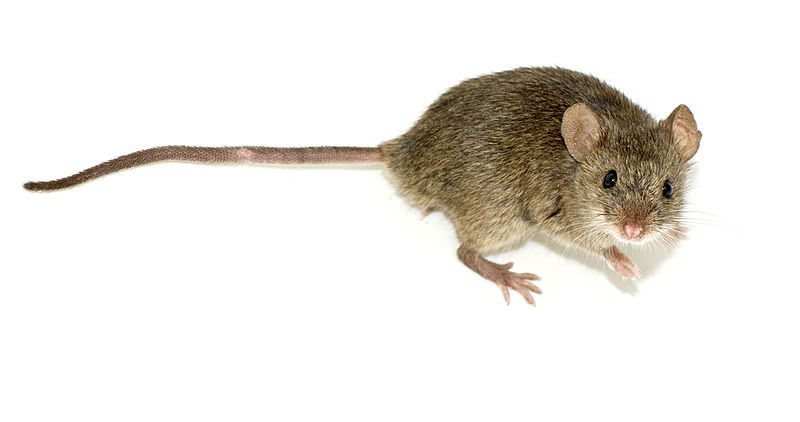
Basque sagu 'mouse'


Basque sagu, sat- 'mouse' is a word found in compounds such as satandera (B, G), satandre (S, R) 'weasel' (and(e)re 'lady'), satitsu (G, HN) 'shrew' (itsu 'blind'), sat(h)or 'mole' (second member unknown) and saguzar (B, G) 'bat' (zahar 'old'), and which has cognates in Afrasian: Akkadian šikkû 'mongoose', Amharic ǝkokko (aškokko, ǝškokko) 'rock hyrax', Ge'ez sˁǝkˁwǝnkˁwǝn, sˁǝkˁwǝskˁwǝn 'field mouse; a kind of lizard'1, Central Chadic *Sakw- 'squirrel; dog'2, Omotic *sakw/*sikw 'chameleon; bat', Kartvelian *tsiqˀw- 'squirrel, mouse' (Georgian ciqˀwi 'squirrel'), Dravidian *tśikk- 'mouse', Old Turkish čekün 'young of marmot', Tungus čekše 'tarbagan (Marmota sibirica)'. Also related are Etruscan seχ3, Thracian súkhis and IE *dhug-h₂ter 'daughter'.

Although Bengtson links the Basque word to Caucasian *tsa:rggwɨ:(~ -ǝ:,-a:) 'weasel, marten' (see here), from which Starostin thinks the Kartvelian word was borrowed, in my opinion this is a genuine Eurasiatic root which in some languages (Kartvelian4, Dravidian, Altaic5) conflated with a phonetically similar word 'small'6, probably for tabooistic reasons. 
______________________________________________
1 Quoted by Dolgoposky (ND 310a). See also W. Leslau (2010): Concise Dictionary of Ge'ez, p. 226.
2 Where S is an unspecified sibilant.
3 Also spelled as sec, śec, śeχ. 
4 Kartvelian *tśˀukˀ- (Georgian cˀukˀ-an-a 'very small', Megrel čˀukˀ- 'mouse').
5 Altaic *tʃhjà:khe(~ -u) 'small'.
6 For which Dolgopolsky (ND 334) reconstructs a separated root, which he considers to be phonosymbolic.