24 July 2016

Basque etxe 'house' (updated)


Basque etxe /etʃe/ 'house' is a native word without Romance cognates. The most conservative variant, attested in old texts, is etse /etśe/, with etxe, itxe (G, HN) resulting from palatalization and etze /etse/ (B) from the merging of sibilants //, /ts/ into /ts/ in Western dialects. There's also the combinatory form etxa-, well attested in toponymy (even outside today's Basque-speaking areas), as in Javierre1 < Etxaberri 'new house'.

Rather interestingly, etxe means 'floor' in the Western compound burtetxe (B), gurtetxe (G, HN) 'floor of a cart', (L) 'framework of a cart', whose first member is burdi, gurdi 'cart, carriage'. 

This kind of semantic drift across long periods of time (e.g. several millenia) is very usual, so one must take it into account in long-range comparisons2This is why I'd link the Basque word to Caucasian *=asA ‘to sit, to stay’ and Uralic *aśe- ‘to put, to place, to lay; to put up a tent’3.
_______________________________________________________________ 
1 From which derives the personal name Xavier/Javier.
2 Unfortunately, paleolinguists (including Nostraticists) very often neglect to do so, as in the comparison with Caucasian *tsˀ[i:]ju 'house' proposed by Bengtson.
In fact, the amateur linguist Eduard Selleslagh-Suykens had a similar idea to mine, although he chose the wrong cognate.

18 May 2016

Snake eyes (updated)


The Etruscan numeral zal1, es(a)l '2' is attested in dice -Etruscans were affectionate of gambling- and inscriptions, and it's also part of esl-em zaθrum '18' (lit. '2 from 20'), where za-θ-r-um '20' can be analized as the concatenation of '2' with locative, plural and collective suffixes, i.e. 'collection of things in twos'2.

Although some amateur linguists have proposed links to either East Caucasian (Nakh-Daghestanian) or Hurrian, there're no obvious parallels elsewhere. However, Etruscan ci '3' is related (most likely due to borrowing) to Hurrian kig '3', a Hurro-Urartian isogloss shared with Nakh *qo-, with an optional suffix used for sheep counting. This is particulary interesting, because this numeral strongly resembles Daghestanian and West Caucasian (Abkhaz-Adyghe) '2' (NCED 2315)3, while at the same time both Hurro-Urartian and Nakh borrowed their numeral '2' from Semitic4.

As it happens, numerals aren't too much old (Neolithic at the most) and in many cases they're loanwords or even Wanderwörter4, so they're of little value for establishing distant language relationships.

______________________________________________________________________
1 Etruscan z stands for an affricate /ts/.
2 E. Robertson (2006): Etruscan's Genealogical Linguistic Relationship with Nakh-Daghestanian: A Preliminary Evaluation.
3 IE *dwo '2' is likely a loanword from West Caucasian.
4 Some Semitic numerals, namely '7', spread as such to IE and other language families.

27 January 2016

The bear and the marten (updated)


The common IE word for 'bear', found in most branches (Hittite hartagga-, Celtic *arto-, Greek árktos, Armenian arǯ, Avestan arša-, Latin ursus, Sanskrit ŕkṣa-, etc) is usually reconstructed as  *h₂ərətk´o-, where the "thorny cluster" tk´ (þ in older reconstructions) has various reflexes t, s, š, kt, kṣ.

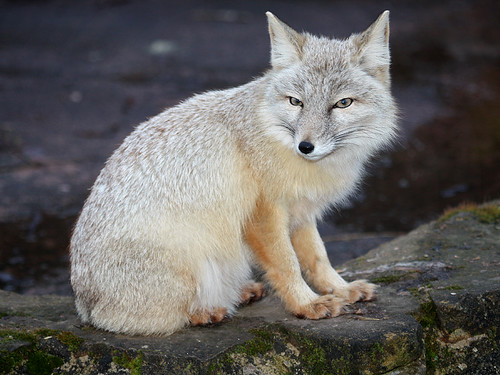
However, I regard the Hittite segment -gga- as a suffix like the one found in Turkic qarsaq 'steppe fox' < Altaic *karsi 'marten'. This would leave us with a protoform *h₂ərəC-ko-, where C would represent a sibilant (possibly palato-alveolar) affricate like the one of NE Caucasian *χHVr[tɕ’]V 'marten; otter'1 (a Nakh-Dargwa isogloss). Probably also Yeniseian *χa(ʔ)s (~ k-) 'badger' belongs here.

Ignoring external data, some Indo-Europeanists have proposed a link between 'bear' and an IE verb 'to destroy'. Interestingly enough, this meaning is represented in NE Caucasian by *HarGG(w)V, which I'd link to Altaic *jàrgi (~ -o) 'wild beast of prey' and possibly also to Arabic ʕurāʒ- 'hyena(s)', proposed by Nostraticists as cognates of IE 'bear'.
______________________________________________________
1 Using his etymological instinct, Bengtson links this to Basque hartz 'bear', an IE loanword, most likely from Celtic.

07 November 2015

The horse goes before the cart (updated)


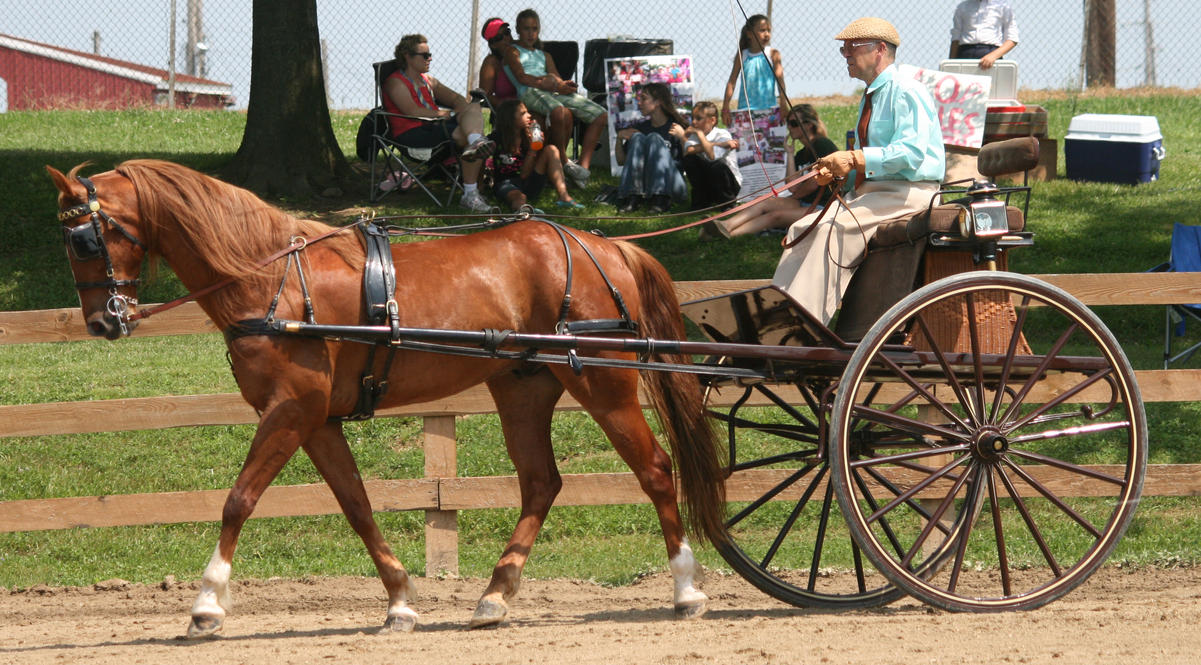
Germanic *xursa-/*xrussa- 'horse' has been linked by some Indo-Europeanists to Latin currō 'to run'1. This verb is derived from a Paleo-European lexeme *kərəs- also reflected in Celtic *karro- and Latin currus 'cart'2 < *kərəs-o-. However, in chronological terms, the traditional view of deriving 'horse' from a verb 'to run' would be like putting the cart before the horse. That is, the meaning 'horse' has to be older than 'run' and not the other way around.  

In my opinion, the Paleo-European word would be related to East Caucasian *ʁHwo:r[tʃʔ]o (˜ -tɕʔ-,-ə) 'deer, game', probably dating from the Upper Paleolithic. Possibly  also Yeniseian *kuʔs 'horse' belongs here, as the names of domesticated animals are often Wanderwörter.

The Caucasian word is also the source of Kurganic IE *jorko-3 (Celtic *jorko- 'roe deer (Capreolus capreolus)', Greek zórks, dórkas 'gazelle'), with metathesis. 

I also suspect this is the origin of the autochthnous name of the Pyrenean chamois (Rupicapra pyrenaica)4Aragonese chizard(o), ixarzo, Gascon isar(t), idart, Catalan isard < *i-tsardV, with regular merger of sibilants /ts/ and /s/ in Gascon and Catalan and a prefix *i-, probably a fossilized article. There's also the unprefixed western variant *tsarri > Gascon sarri, Aragonés sarrio, the latter borrowed into Basque5.
_______________________________________________________________________________
1 G. Kroonen (2013): Etymological Dictionary of Proto-Germanic, pp. 260-261.
2 Latin carrus is a Celtic (Gaulish) loanword.
3 Caucasian ʁ ~ Kurganic IE k and Caucasian  ~ Kurganic IE j.
4 A species of mountain goat which lives in the Pyrenees, Cantabrian Mountains and the Apeninnes, considered to be a subspecies of the chamois (Rupicapra rupicapra) by some specialists.
5 The lack of a native Basque word for the animal can be explained from its absence from the Basque-speaking area.

29 October 2015

Gaulish *agranio- 'sloe, fruit of the blackthorn' (updated)

Sloes

Occitan agranhon, Aragonese arañón, Catalan aranyó 'sloe, fruit of the blackthorn (Prunus spinosa)' < Gallo-Latin *agraniōne-, is a diminutive form borrowed from Gaulish *agranio-. The Gaulish word is also the source of Basque ar(h)an, which means 'sloe' in Biscayan1 but 'plum' in other dialects, as well as the collective form arantza (B, G), arantze (L), arhantza (LN) 'thorn(bush)'.

A bottle of home-made patxaran

A popular liquor made from sloes is called patxaran (Spanish pacharán) from the High Navarrese name of the fruit, which is a variant of ba(i)saran (G), baixaran (S), maisaran (R), basahan (Z), paxaran (HN, Aezk, R), a compound from basa- 'wild' and aran.

The corresponding form in Insular Celtic is *agriniā (Old Irish áirne, Welsh eirin), although phonetic differences make impossible to reconstruct a single Celtic protoform. IE cognates are Germanic *akarna-/*akrana-/*akirna- 'acorn'2, Latin agresta 'green grape', agrestis and Greek ágrios 'wild', which have nothing to do with 'field' (Latin ager, Greek agrós) in despite of their resemblance.

Oak acorns
 
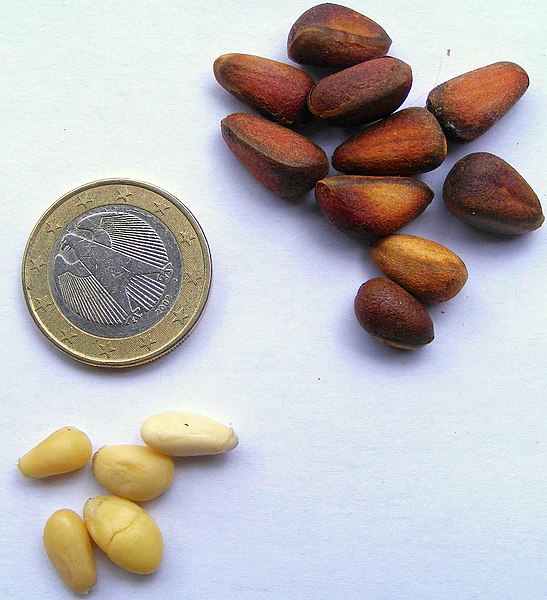
The scarce attestation within IE and the semantic latitude point to a Paleo-European substrate loanword which I'd link (with loss of the initial nasal) to Uralic *nakrV 'cedar nut'3, and possibly also to Altaic *ɲíkrV 'a k. of thorny tree', Eskimo *(Nǝ)k[r]uʁa- (~ *Nǝkǝvʁa-) 'tree, spruce'.

Cedar nuts (with and without shell)
_______________________________________________________
1 The Gipuzkoan form is txaran. In these Westernmost dialects, 'plum' is okaran, apparently from an anaptyctic form *akarann.
2 Pokorný conflated the Celtic and Germanic words with Lithuanian úoga 'berry', OCS (j)agoda 'fruit', vin-jaga 'grape', which are better linked to Latin ūva 'grape'.
3 The fruit of the Siberian pine (Pinus sibirica) or Swiss pine (Pinus cembra).

29 September 2015

Basque gorri 'red'

According to the Vascologist Joseba Lakarra, Basque gorri 'red' derives from a lexeme *gorr- 'raw meat'. However, the isolationist paradigm of academic Vascology precludes further investigation of cognates in other language families. 

Considering the voiced initial stop in Basque was originally voiceless and also the trill rhotic isn't the product of gemination, the most likely candidates would be Altaic *kʰjú:ru ‘red, reddish; brown, dark’ (EDAL 1090) and IE *kreuH₂- ‘blood, gore’ (Greek kréas 'meat', Lithuanian kraûjas 'blood'), thus pointing to a lexeme *kʰruH-1 ~ *kʰuHr- which would date back to the Upper Palaeolithic and underwent a semantic shift from 'raw meat; blood' to 'red' in Altaic and Basque.

One interesting derivative of gorri is gorringo2, which refers either to a kind of mushroom (Amanita caesaria) or the egg's yolk.
______________________________________________________________
1 IE *e is the ablaut vowel and doesn't play any role in the actual etymology.
2 With the variants gorrinko in the Easternmost dialects (Roncalese, Zuberoan) and korrinko in the extinct Alavese.

19 September 2015

Galician-Portuguese silva 'bramble' (updated)

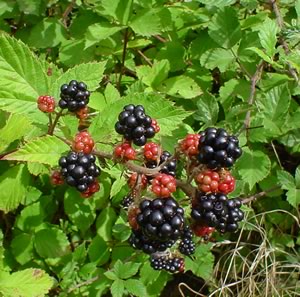
Blackberries

Contrarily to what some linguists think, Galician-Portuguese silva, silveira (collective) 'bramble (Rubus)' is unrelated to the homonymous Latin silva 'forest' (which regularly gives Romance selva), but it's cognate to Leonese silba 'service berry', silbar, silbal (collective) 'service tree (Sorbus domestica)'2.

Service berries

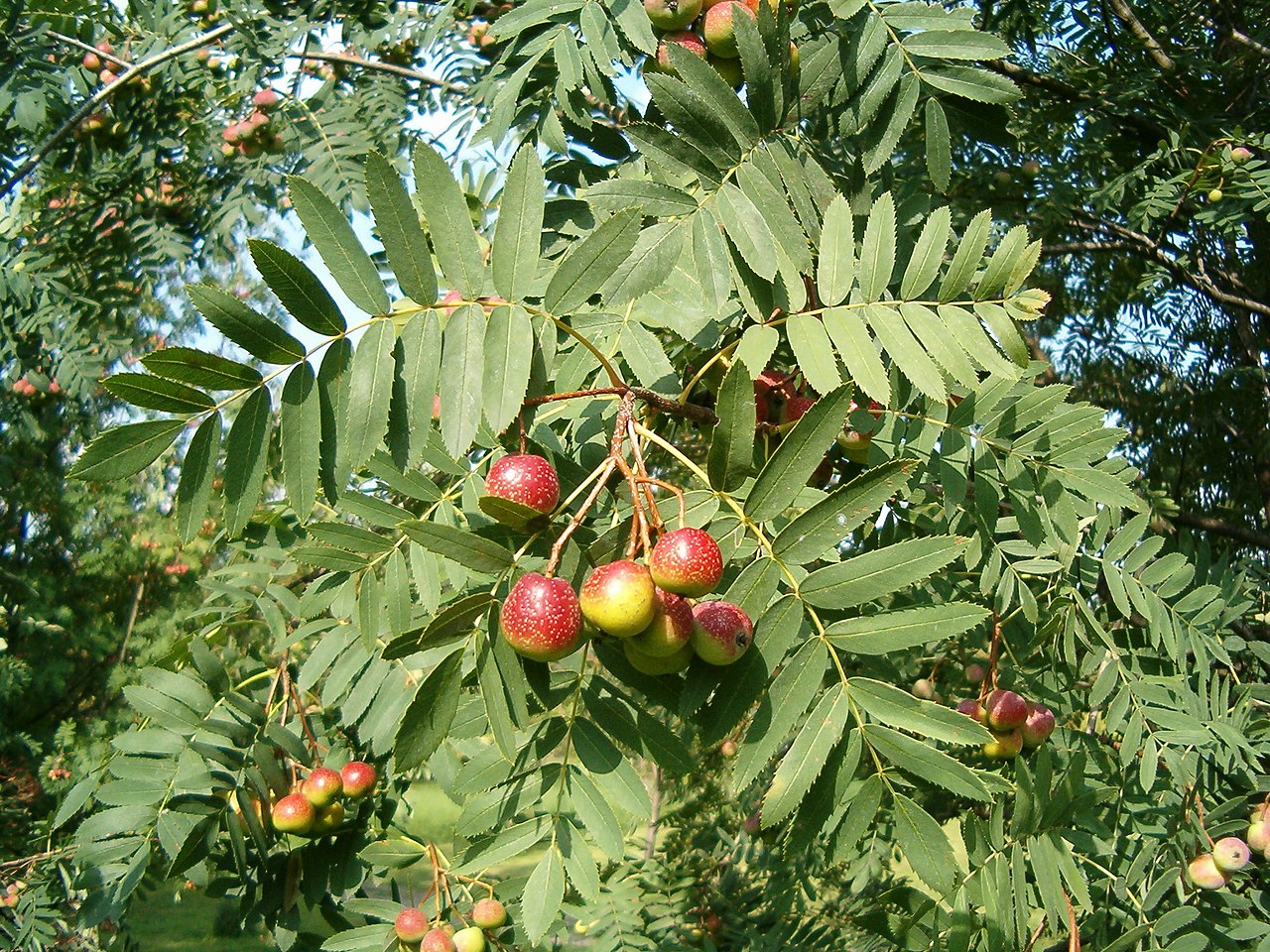
This is a substrate loanword *silba1 with parallels (through lambdacism) in Romance serba 'service berry'3 (Catalan serva, Occitan sèrba, Spanish serba, jerba, sierba id., serbal, sierbal, Catalan servera, server (collective) 'service tree'4), Lithuanian serbentà 'currant (Ribes)' and dialectal Russian serbalína, serberína 'rose hip', sor(o)balína 'bramble'5, Latin sorbus 'service tree' (Spanish sorbo), sorbum 'service berry', from which derive Leonese (Liébana) suerbaFrench sorbe id., sorbier, Galician sorbeira, solveira (collective), Leonese  (Liébana) suerbal  'service tree'.

Although these forms show the typical IE ablaut e ~ o6, we also can find variants with /u/ vocalism: Leonese (Liébana) surba 'service berry', surbu (collective) 'service tree' and regional Spanish (Álava, Bureba, High Rioja) zurba, zurbia 'service berry', zurbal, zurbial, surbial (collective) 'service tree'. 

________________________________________________________ 
1 The shift -lb- > -lv- is regular in Portuguese.
2 J. Oria de Rueda et al. (2006): Botánica forestal del género Sorbus en España, in Investigación Agraria. Sistema y recursos forestales, vol. 15, nº 1,  p. 166-186.  
3 The proposed connection (Pedersen) with Celtic *swerwo- 'bitter' (Old Irish serb, Middle Welsh chwerw) can be ruled out. 
4 The forms serbo, jerbo, selbo, jelbo are the product of a contamination with sorbo.
M. Vasmer (1955): Russisches Etymologisches Wörterbuch, p. 697.
In fact, some Indo-Europeanists reconstruct a protoform *serbh- ~ *sorbh-.

16 August 2015

Tartessian Aiburis (updated)

Tartessian aiburis /Aiburis/ appears at the beginning of a funerary inscription (J.3.1) and is frequently interpreted as an anthroponym whose second element -ris would correspond to Celtic *-rīxs 'king' > -rix, which in fact is the most frequent element in Gaulish anthroponymy1. However, the first element aibu- (likely reflected in Iberian aibe), doesn't have a clear Celtic etymology, although it appears in the Gallaecian theonym Aebosocelensis2 and possibly also the toponym Aipora (modern Évora)3.

Prósper proposes a link to Greek aipús 'steep, craggy', aípos 'hill, crag', whose etymology is disputed4. If the labial stop comes from a labiovelar, we could compare it to the Italic toponyms Aequāna, Aequum Faliscum and Aequimelium (a village on the hillside of the Capitoline), the latter being a calque of the Gallaecian form. Although homonymous to Latin aequus 'equal; fair, even' < *aikʷo-, we can hardly expect Aequimelium to mean 'confraternity hill' or the like.

On the other hand, we've got Gallic (Gaulish) *aikʷo-randā 'boundary' as the source of the toponyms Aigurande, Eguérande, Eygurande, Iguerande, Ingrande(s), Yvrande(s), La Guirande, Eurande, etc5. The first element *ekwo- has been alternatively linked to Latin aqua 'water' (absent from Celtic) or aequus, but in my humble opinion it would make more sense to be a foreign loanword related to the Italic toponyms. 
_________________________________________
1 X. Delamarre (2008): Dictionnaire de la langue gauloise, 2nd edition, pp. 259-260.
2 B.Mª. Prósper (2000): Lenguas y religiones prerromanas del occidente de la Península Ibérica, p. 112.
3 J.T. Koch (2013): Celtic in the South-west at the Dawn of History, 2nd edition, p. 141.
4 P. Chantraine (1968): Dictionnaire étymologique de la langue grecque, p. 37-38.
5 X. Delamarre, op. cit., pp. 163-164.