12 July 2014

Greek kédros 'cedar', Latin citrus 'thuja; citron'


As most terms related to Mediterranean flora, Greek kédros 'cedar' (borrowed into Latin cedrus) has no IE etymology. There're also the derivatives kédris, kédron 'juniper berry' (actually a modified conifer cone).


On the other hand, Latin citrus, which designates two different kinds of tree, 'thuja(citrum 'thuja wood') and 'citron'1, is somehow related to the Greek word, possibly through an Etruscan intermediate2.
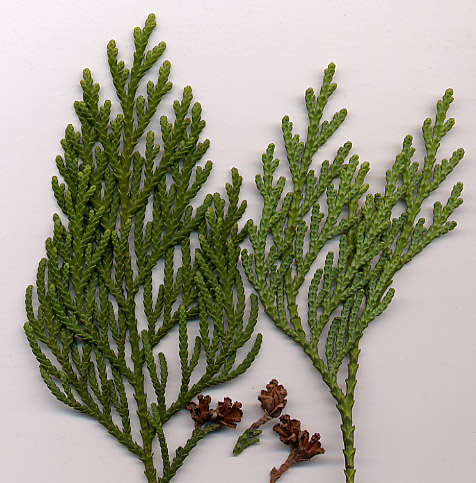


In my opinion, these are instances of a Wanderwort of Semitic origin: *kˁtr- 'smoke, incense', referring to the aromatic characteristics of these trees, either the wood (cedar, thuja) or the fruit (citron). 
______________________________
1 Whose Greek names kítron, kítrion, kítrea, are seemingly loanwords from Latin.
2 A. Ernout & A. Meillet (1959): Dictionnaire étymologique de la langue latine, pp. 123-124.

05 July 2014

Greek parthénos 'virgin, unmarried girl' (updated)

Goddess Britomartis

Greek parthénos 'virgin, unmarried girl' is an interesting word with no clear Indo-European etymology, although the German Indo-Europeanist Gert Klingenschmitt1 has proposed a derivation from *pr̥-sténos '(having) protunding breasts', a compound of *pr̥- 'before' and *sténos 'breast' (Avestan fštāna-) < IE *psten(o)- parallel to Avestan ərəduua-fšnī- 'having firm breasts'.

Despite being accepted by some specialists2, to me this proposal is phonetical and semantically implausible, so I regard this word as a kinship term with parallels in Old Prussian mārtin, mārtan 'bride', Lithuanian martì ‘bride, daughter-in-law’, Latvian mā̀rša 'brother's wife', Crimean Gothic marzus ‘wedding’, apparently a Wanderwort found in Eteocretan *marti-/*marpi- 'virgin/maiden' (cfr. the Goddess Britomartis 'Sweet Virgin/Maiden'), Etruscan marθ 'bride' (in papac marθc svlisva 'the wills of the grandfather and the bride')3, and ultimately related to East Caucasian (Nakh-Daghestanian) *bHaddɮi (~ -ǝ-) 'young (of animals)'4, with cognates in Proto-Altaic *bāla 'child, young' and PIE *pelH- 'foal' (Greek pôlos 'foal', Armenian ul 'kid, young of deer or gazelle', Albanian pelë 'mare')7

In my opinion, this is the likely source of Sanskrit p̥thuka- 'calf, young of an animal', Armenian ortc 'young of cattle or deer' and Greek pórtis 'calf, young heifer', pórtaks 'calf'5, linked by Thomas Burrow6 to parthénosThe semantic shift from 'heifer' to 'virgin, unmarried girl' would be explained in the context of a pastoralist society like those of Kurgan peopleAlso related would be Germanic *farzá-, *farzḗn, *fársō(n) 'bull, ox' and Slavic *porsъ 'bull'.
______________________________________________________________
1 G. Klingenschmitt (1974): 'Grieschisch παρθένος', in Antiquititae Indogermanicae. Gedenkschrift für Hermann Güntert, pp. 273-278. 
2 R.S.P. Beekes (2010): Etymological Dictionary of Greek, p. 1153. See also X. Delamarre (2008): Gauloises Ardasina, Titiluxsa, Uxesina, grec parthénos, avestique ərəduuafšnī-. Une dénomination indo-européenne de la jeune femme: 'celle qui ha les seins hauts'.
3 A. Morandi (1987): La tomba degli Scudi di Tarquinia [Contributo epigrafico per l'esegesi dei soggetti], in Mélanges d'École française de Rome. Antiquité, p. 104.
4 Diakonoff-Starostin link to this Hurrian pōra-(m)mi, Urartian porā 'slave'. See I. Diakonoff & S. Starostin (1986): Hurro-Urartian as an Eastern Caucasian Language, §2.
5 Also related are Old Church Slavonic za-prъtъkъ 'wind egg', Czech s-pratek 'premature calf' (Pokorný).
6 T. Burrow (1955): The Sanskrit Language, p. 71. 
7 J. Mallory & D. Adams (2006): The Oxford Introduction to PIE and the PIE world, p. 192.

02 July 2014

Furnée and the Pre-Greek substrate (updated)


In order to characterize Pre-Greek loanwords in his own Etymological Dictionary of Greek (2010)1, the Dutch Indo-Europeanist Robert Beekes used his compatriot Edvard Furnee's PhD disertation Die wichtigsten konsonantischen Erscheinungen des Vorgriechischen (1972), a pioneer work later followed by Vorgriechisch-Kartvelisches. Studiem zum ostmediterranen Substrat nebst einem Versuch zu einer neuen pelasgischen Theorie (1979) and Paläokartvelisch-pelasgische Einflüsse in den indogermanischen Sprachen. Nachgewiesen anhand der spätindogermanisch-griechischen Reflexe urkartvelischer Sibilanten und Affrikanten (1986).

In these later works (thoroughly ignored by Beekes2), Furnee develops the theory Pre-Greek/Pelasgian was a Paleo-Kartvelian (an older stage than Proto-Kartvelian) language. For example, Greek kháos 'abyss, chasm'3 < Pre-Greek *kʰáw- can be linked to PK *qew-/*qaw- 'ravine' (Old Georgian qev-i, qev-n-i, Georgian xev-i, Megrel xab-o)4, where PK q ~ Pre-Greek '5.

In my opinion, these and other correspondences between Pre-Greek and Kartvelian would be evidence of language contact rather than a genetic relationship6, as they include borrowings into the opposite direction. For example, although PK *tor (Georgian tor-i, torn-i 'harness, armour')7 corresponds to Greek thôraks (Ionic thôrēks, Mycenean TO-RA-KE) 'cuirass; trunk, chest'8 < Pre-Greek *tʰur-āk-, it's clear the source can't be Paleo-Kartvelian.

This would be an Eurasiatic root found in Latin corium 'skin, hide, leather', cortex 'bark, shell', Sanskrit cárman-, Avestan čarǝman- < PIE *s-ker- 'bark, skin'9, PK *tser- (Laz cara) 'rough infertile earth', Proto-Uralic *tɕarV 'hard', Proto-Altaic *tSarV 'snow, snow crust', Proto-Dravidian *tSara- 'rough on surface', and whose protoform is reconstructed by Dolgopolsky as *tɕ(ˀ)arV/*tsˀarV 'hard/firm, hardened crust, hard surface' (ND 311). The initial sibilant affricate was centumized into a velar stop10 (palatalized in Indo-Iranian) in IE but it gave a dental stop in Pre-Greek.

__________________________________________ 
1 Which is part of the so-called Indo-European Etymological Dictionaries Online (IEDO) project, a series of etymological dictionaries of IE languages edited by Alexander Lubotsky from Leiden University. Until some years ago, preliminary versions of them were available online for free under the label Indo-European Etymological Dictionary (IEED), but unfortunately now they are of restricted access, as copyright is owned by publisher Brill. 
2 He regards Pre-Greek as a uniform non-IE language "with no recognizable cognates", thus ignoring most recent research on the subject. 
3 On the other hand, the related kháũnos 'slack, porous; vain, frivolous' < Pre-Greek *kʰáw-n-o- derives from a suffixed variant of the same root. Beekes' allusion to a possible parallel in Germanic and Baltic 'palate' is totally ungrounded. See R.S.P. Beekes (2010), op. cit., p. 1614.
4 E.J. Furnée (1979), op. cit., §57.
5 Notice, however, the possible link (already observed in Varro's De lingua latina) between the Greek word and Latin cavus 'hollow' < PIE *kouH-o- by Thurneysen-Havet's Law. See L. Horton-Smith (1895): Establishment and Extension of the Law of Thurneysen and Havet, The American Journal of Philology, 16, pp. 444-467.
6 In fact, the Kartvelianist and Indo-Europeanist Thomas Gamkrelidze accepted some of Furnée's correspondences, relating them to the argonauts. See T.V. Gamkrelidze & V.I. Ivanov (1995): Indo-European and the Indo-Europeans, p. 799-804.
7 E.J. Furnée (1979), op. cit., §16.
8 R.S.P. Beekes (2010), op. cit., p. 569.
9 Please notice Greek kôrykos 'leather sack' is unrelated. See R.S.P. Beekes (2010), op. cit., p. 816.
10 Not *sk- as thought by Nostraticists, because *s- (called "s-mobile" in the literature) is a fossilized prefix.

17 May 2014

The swallow

Some years ago, Kim McCone1 noticed the striking similarity between the Insular Celtic (Old Irish fannall, Welsh gwennol) and the Basque (enara, ain(h)ara, etc.2) words for 'swallow', thus reconstructing a Celtic protoform *wannālā/*wennā. It also becomes apparent that the Basque word must be a loanword from Celtic, although with an unusual loss of *w-, which we would expect to surface either as b- or m-3 in Basque.

For the Celtic word, Ranko Matasovićdevises an IE etymology from *wes-r-/-n- 'spring' plus the adjectival suffix -ā, implying a semantic development from 'messenger of spring'. A-sn- regularly gives Celtic -nn-, we also need to assume the variant *wannāarose from *wennāfrom vowel harmonizationHowever, this proposal has been objected by some scholars, namely David Stifter5, who thinks both Celtic and Basque are loanwords from a substrate language, presumably non-IE.

Although I also disagree with Matasović, I think an IE etymology (although not a native Celtic one) is still possible from the root  *wand-/*wend- 'to weave, to twist', with -nd- > -nn- in an unidentified IE language. As swallows are seasonal birds, semantics would be parallel to Old High German wantalōn 'to be back and forth; to change' > German wandeln.


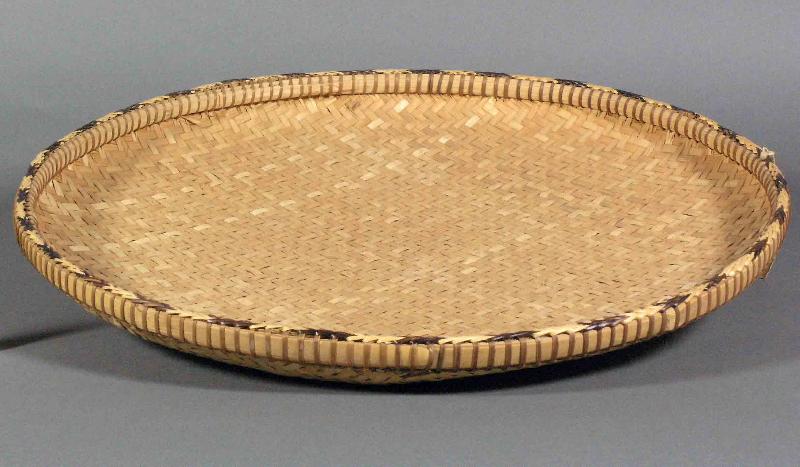
On the other hand, French vanneau 'lapwing' (linked by some scholars to the Celtic word) derives from Late Latin *vannellus, a diminutive form of vannus 'winnowing basket', which I'd adscribe to the above etymology. The Latin word was borrowed into Old English fann 'winnowing basket' > English fan6.
_____________________________________
1 K. McCone (2005): 'Mögliche nicht-indogermanische Elemente in den keltischen Sprachen und einige frühe Entlehnungen aus indogermanischen Nachbarsprachen', in G. Meiser and O. Hackstein (eds.), Sprachkontact und Sprachwandel. Akten der XI. Fachtagung der Indogermanischen Gesellschaft, 17.-23. September 2000, Halle an der Saale, Wiesbaden, p. 395-435.
2 Variants include ainhara (L), ainhera (LN), aiñara (LN), aiñera (LN), añhá(r)a (Z), añhé(r)a (Z), enara (B,*A, G, HN), txenara (G), enada (B, G, HN,*L), txenada (G), einhara (L), ernara (B), enere (HN), inara (HN), iñara (HN), inhara (L, LN), iñare (Aezk), inhade (L), iñar (R, S), aiñari (S), elae (*B), elai (B, G), alae (B), alai (B, G), añai (R), which refer to either 'barn swallow (Hirundo rustica)' or (less frequently) to 'common swift (Apus apus)'.
3 Maybe reflected in Roncalese maiñari 'bat', whose semantics is parallel to the compound gau-enada (*L), gabenara (HN), gau-inhara (*L), gau-iñara (HN, Bazt) 'bat', from gau 'night'.
4 R. Matasović (2009): Etymological Dictionary of Proto-Celtic, p. 416-417.
5 D. Stifter (2010): The Invisible Third: The Basque and Celtic Words for 'Swallow', Ériu 60, p. 145-157.
6 Other words for 'fan' in Romance languages such as Spanish abanico, Catalan vano, are ultimately derived from vannus.

09 February 2014

The rose


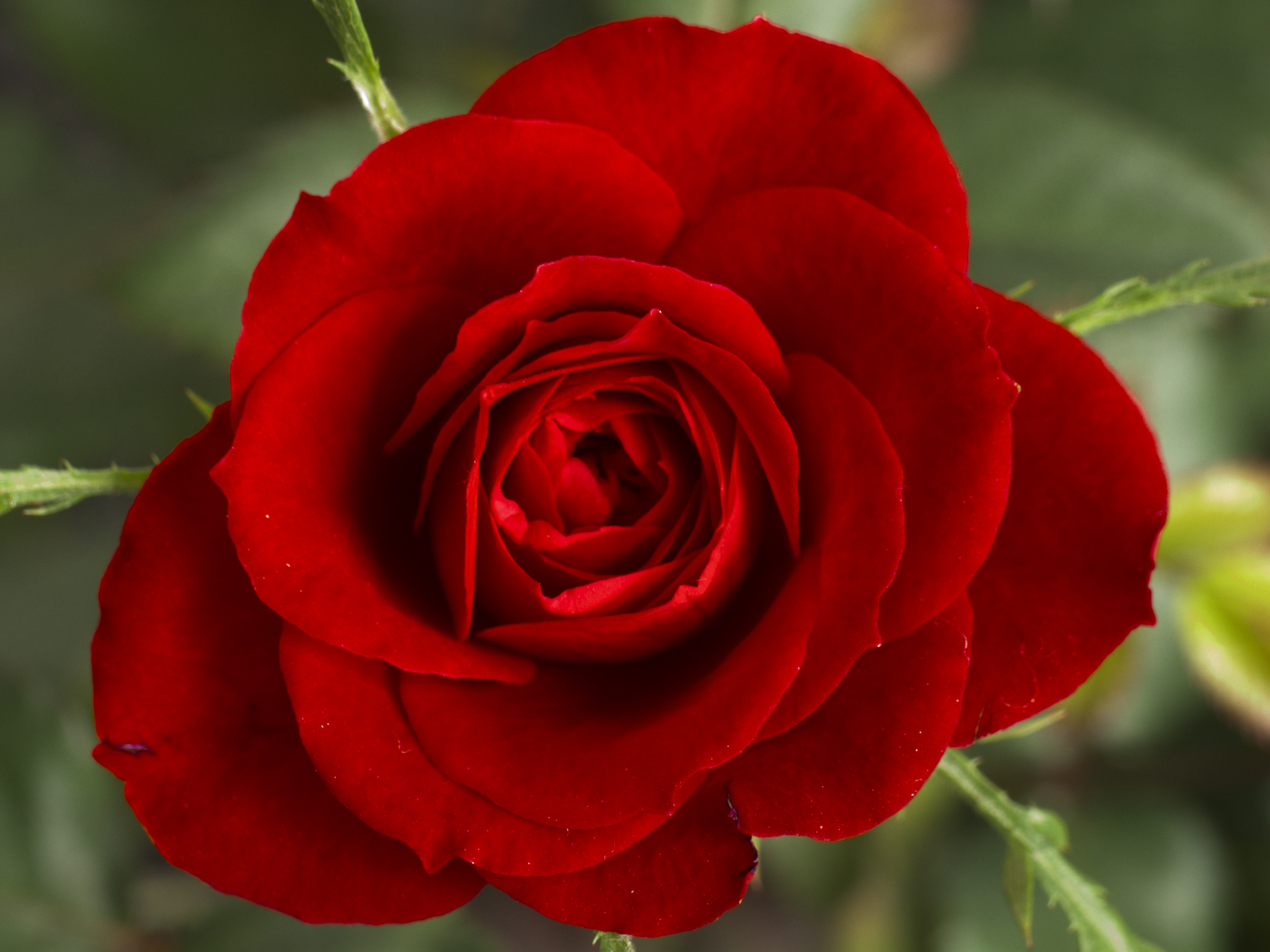
Avestan varəda, New Persian gul 'rose' < Iranian *wr̥da- is a Wanderwort which spread to Armenian vard, Aramaic wardāˀ, Arabic ward1. The lazy Beekes considers Greek rhódon (Aeolic bródon) 'rose' < *wródon to be "certainly borrowed from the East", but he forgets to explain the Greek vocalism (ro instead of the expected **ar/ra).

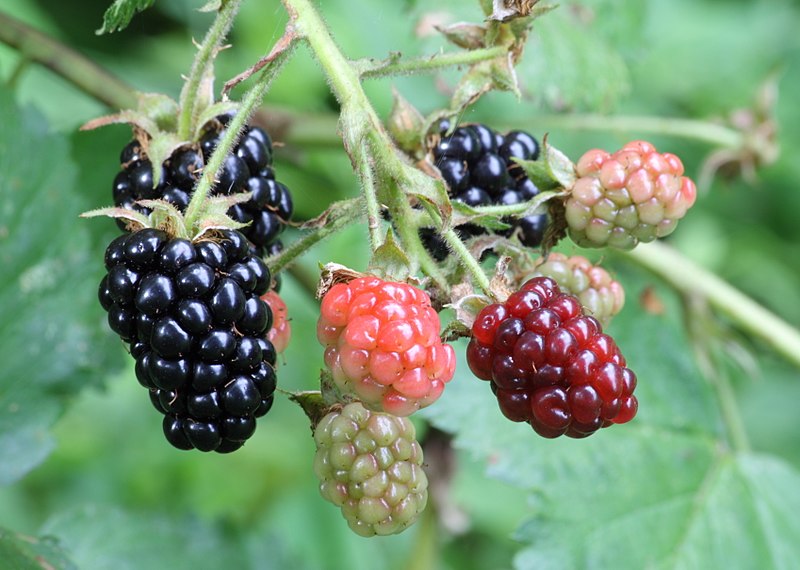
In my opinion, the Greek word would be a substrate borrowing from a reflex of *wr̥d-o- in a language where  > ro as in like Holzer's "Temematic"2. This protoform is the source of Germanic *wurθ-/*wurd- 'sweet briar (Rosa rubiginosa)' and Italic *ruθo- 'bramble (Rubus fruticosus)' > Latin rubus.
 
On the other hand, dialectal Italian (Tuscan) rasa, ràzina, razzola 'bramble' would be derived from Etruscan *raθia (glossed as radia by classical authors) < *rad-ja3. Also according to my amateur colleague Douglas Kilday, Latin rosa 'rose'4 would be a loanword from Etruscan *ruθia through the intermediation of Sabine *rodja.

Also Kartvelian *bardzg- 'thorns, thorny plant', *burdzg(a)- 'bristle' would descend from an earlier protoform *bardj-/*burdj- 'thorn', where the cluster *dzg would derive from a patalized dental stop *dj, according to the correspondences proposed by Bomhard5.
________________________________
1 R.S.P. Beekes (2010): Etymological Dictionary of Greek, p. 1289-1290.
2 G. Holzer (1989): Entlehnungen aus einer bisher unbekannten indogermanischen Sprach in Urslavischen und Urbalistischen. See also F. Kortland (2010): An Indo-European substratum in Slavic?, in Studies in Germanic, Indo-European and Indo-Uralic, p. 73-81.
3 This etymology would also explain Latin radius '(pointed) stick; light beam; wheel spoke' as a loanword from Etruscan.
4 Which Beekes considers to be "probably borrowed from Greek, but the details are unclear". Good gracious!
5 A. Bomhard (2008): Reconstructing Proto-Nostratic, vol. 2, p. 237-243.

18 November 2013

Paleo-Balkanic *mendjo- 'foal' (updated)


Albanian mëz, mâz, Romanian mînz (a Dacian substrate loanword) 'foal' derive from a Paleo-Balkanic1 protoform *mendjo-2 related to Gaulish mandu-, borrowed in turn into Latin mannus3. Also related are Basque mando 'mule' (dialectally also 'sterile animal or woman'), presumably a Celtic loanword, as well as dialectal High German (Tirol) Manz, Menz 'sterile cow'and Italian manzo 'ox'5

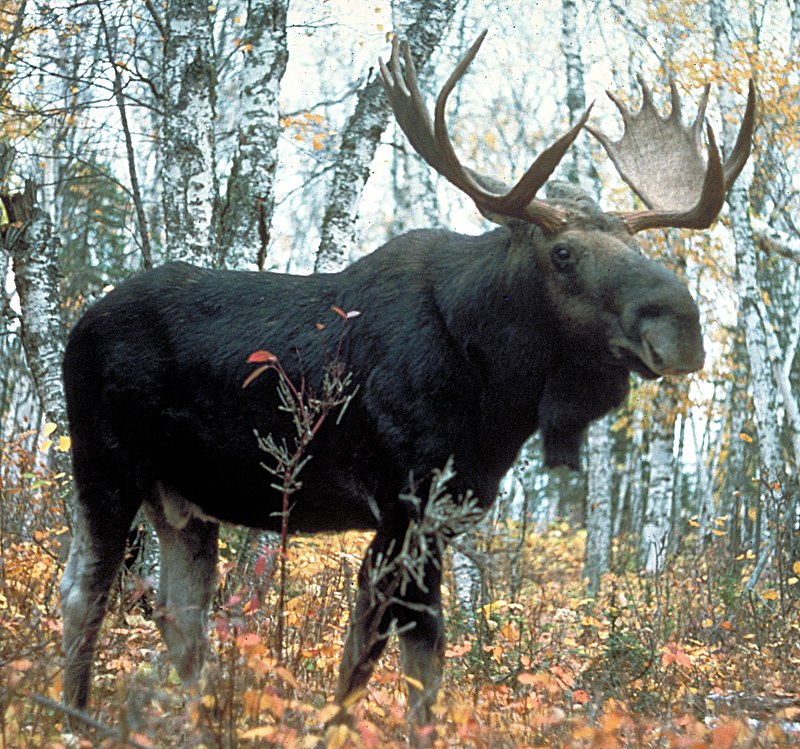
Probably also belong here Sanskrit mandurā 'stable for horses', mandira- 'dwelling, house' and Greek mándra 'pen, stable'. In my opinion, we're dealing with a Wanderwort of ultimate Altaic origin: Tungusic *manda-ksa 'Eurasian elk (Alces alces)', Mongolian *mandʒi 'male elk' and Turkic *buto 'young of camel'  (EDAL 1253)

Basque idi 'ox' can also be derived from this etymology, assuming the following changes (not necessarily in that order): 1) loss of m-, 2) end > id, 3) -o > -i6.

_____________________________

1 Certainly not IE-native as thought by Mallory-Adams. See J.P. Mallory & D.Q. Adams (2006): The Oxford Introduction to PIE and the PIE World, p. 142.
2 T. Gaitzsch (2010): Das Pferd bei den Indogermanen: Sprachliche, kulturelle und archäologische Aspekte, p. 263-264.
3 X. Delamarre (2008): Dictionnaire de la langue gauloise, p. 214.
4 J. Pokorný (1958): Indogermanisches Etymologisches Wörterbuch, p. 729.
5 Possibly a Messapic loanword, cfr. Menzana, a divinity to whom horses were offered.
6 In sharp contrast with more recent loanwords, the native core of Basque underwent so many phonetic changes, up to the point of making it hardly recognizable.

13 November 2013

The ancient Basque homeland (updated)


According to most specialists, the area located between the Garonne river and the Pyrenees, ancient Aquitaine and modern Gascony, is the homeland of the ancient Basques. There we find a high density of Gascon toponyms in -òs, which extends to Basque -oz(e), -otz(e) and Navarro-Aragonese -ués on the other side of the Pyrenees1.

This toponymic element derives from Celtic *ouxsV- 'high' (Old Irish úais, Cornish a-ūch)2, whose superlative *uxsV-(s)amo- 'the highest' can be found in Middle Welsh uchaf, and the femenine *uxsV-(s)amā in Gaulish Uxisama (modern Oisème), Uxamaand Celtiberian Usama (modern Osma). On the other hand, the former proposal of the Spanish linguist Ramón Menéndez Pidal, who linked the toponymic element to Basque otz 'cold' (itself from Celtic *ouxtu-4), can be dismissed.

The same lexeme would also be part of the Aquitanian anthroponym element Andos(s)-, Andox- (Latinized as Andossus, Andoxus) 'lord'5, whose first member would be the Gaulish intensive prefix and- 'very'In my opinion, this evidence, together with loanwords such as gizon 'man' < Gaulish gdonio-, would indicate a Celtic substrate in Paleo-Basque whose existence hasn't been yet discovered by academic Vascologists.
________________________
1 G. Rohlfs (1970): Le Gascon. Études de phylologie pyrénénne. p. 29-33.
2 R. Matasović (2009): Etymological Dictionary of Proto-Celtic, p. 303.
3 X. Delamarre (2008): Dictionnaire de la langue gauloise, p. 329.
4 R. Matasović, op. cit., p. 304.
5 Replaced in modern Basque by jaun < *e-aun, presumably a fossilized participle 'elevated'. 

Man and dog (updated)


Uralic *koje 'man, person' is a remnant of a Borean word which spread as a Wanderwort into East Caucasian *χχHweje (NCED 26) and Tibeto-Burman *qhʷi:j 'dog'1. The suffixed variant  *koj(e)-ra  > Uralic *kojra 'male (dog, man)' would correspond to East Caucasian *χχHwej-rV 'dog' (oblique stem) and Kartvelian (Svan) xwir- 'male (dog)'. IE *wi:r-o- 'man, husband'2 would also belong here, although probably as an inherited word. 

On the other hand, Sinitic *khʷi:-n 'dog' borrowed into I*k´(u)wo:n (a cultural loanword whose direction has been often reversed by Indo-Europeanists3) would be derived from the same lexem with a different suffix. 

Unfortunately, most macro-comparativists are unable to differentiate between borrowed and inherited lexicon4, as they blindly apply the comparative method coined in the 19th by Neogrammarians, which assumes common inheritance from a single source, represented by the genealogical tree model. By applying it to some hundreds of words, this process ultimately leads to the reconstruction of non-existent macro-families whose chronology is shallower (typically 2-3 times) than the actual ones. 
______________________ 
1 For which Starostin reconstructed a Sino-Caucasian etymology.
2 For which Starostin reconstructed an Eurasiatic (Nostratic) etymology.
3 T.V. Gamkrelidze & V.V. Ivanov (1995): Indo-European and the Indo-Europeans, p. 507. 
4 Generally, the lesser the semantic latitude, the likelier we're dealing with a Wanderwort, as it's often the case with names of domesticated animals.